Here's my experience. Over the past few years quartzite has taken off among high-end kitchen countertop buyers. For obvious reasons. Genuine quartzite gives homeowners the dramatic, marble-like vein structure they want paired with the hardness and durability of granite, without marble's shortcomings. On paper it looks like something that can't possibly be real. And sometimes it isn't.
Quartzite is among the most misapplied terms in the stone industry, and it matters. Not every slab sold under that label is technically quartzite. Some of those slabs include dolomite marble, calcite-laden metamorphs, and various transition slabs sitting somewhere between marble and quartzite geologically. Knowing which category your slab fits into is crucial. This isn't an academic distinction. There is the performance difference between a countertop built to last fifteen years, and one likely to stain, etch, and scratch in a way that quartzite will not.
So here is how I test every slab called quartzite. It doesn't take much.
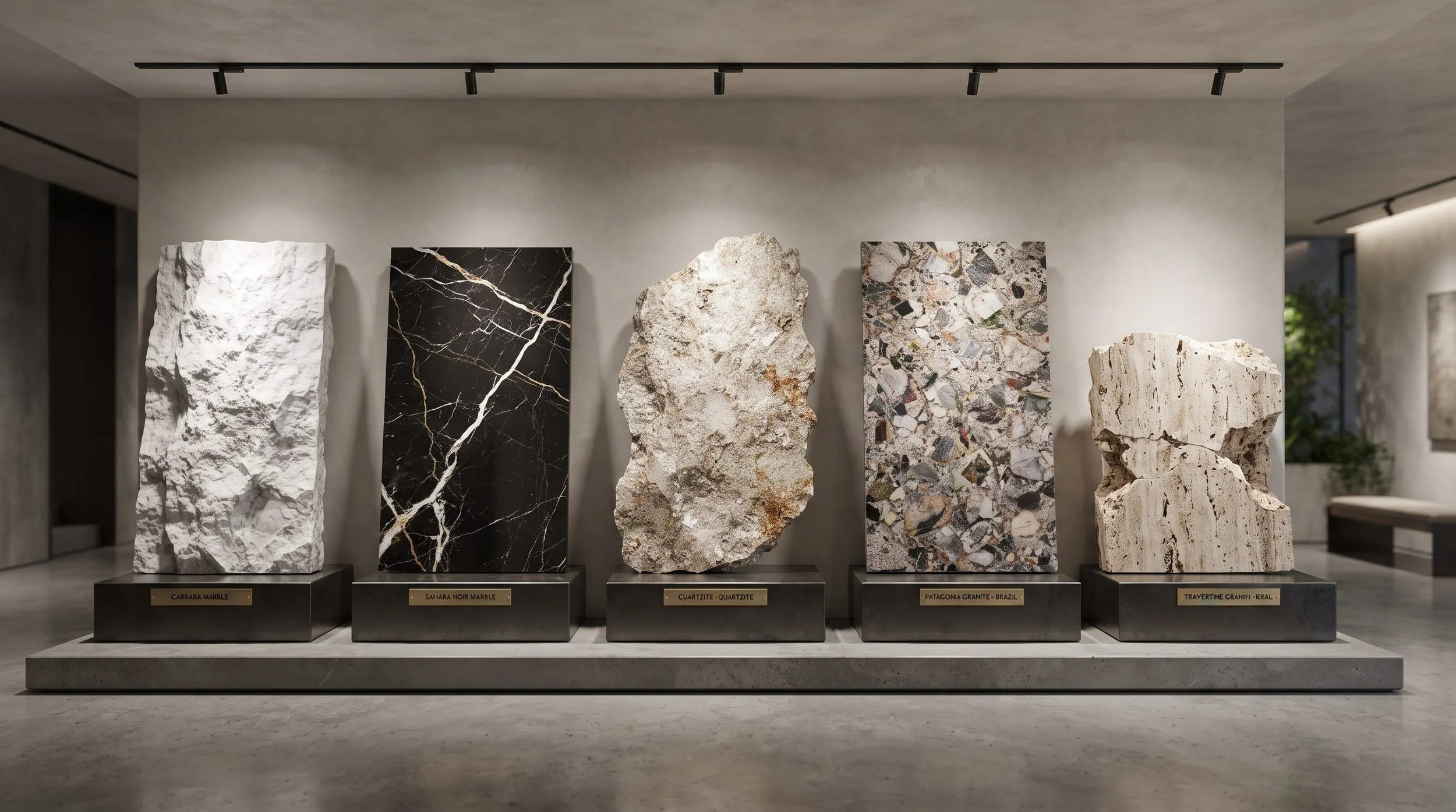
True Quartzite: How it's Formed
True quartzite begins life as pure quartz sandstone. Exposed to immense pressure and heat within the Earth's crust, the quartz particles re-crystallize into an interlocking crystalline structure. The resulting stone is nearly pure quartz, which is one of the hardest minerals known to man at Mohs 7. It really is that simple. A lot of times people forget that geology isn't always complicated.
Properties of Genuine Quartzite
That geological formation creates certain physical properties. Quartzite is harder than granite
(typically 6-7 Mohs); non-reactive with acidic substances; highly dense and extremely durable. Genuine quartzite resists etching due to lemon juice, vinegar, and wine. It doesn't scratch from knife edges or keys. Quartzite seals easily and retains resistance against staining well after initial sealing. Those qualities are precisely why quartzite demands its premium price.
Why Mislabeled Quartzites Occur
The reasons for quartzite mis-labeling are multiple. Some relate to naming conventions. Others arise from the complexity inherent to transitional materials. Still others derive from plain old commercial motivation. Lumping all three categories together results in a significant portion of stones labeled quartzite which do not deserve the name geologically speaking. In practice, those slabs behave differently than true quartzite and need to be managed differently.
Common mislabeled quartzites include:
Dolomite: A calcium magnesium carbonate rock which resembles both marble and quartzite. However dolomite exhibits marble-type behavior. Dolomite etches via acid contact and is softer than genuine quartzite. These stones often come labeled with exotic-sounding names that offer geological connotations without mentioning the actual stone composition.
Calcite marbles: High-end marbles displaying dramatic veins are sometimes marketed as quartzites. This is due to the increased commercial value of quartzite vs marble. Again, it happens more often than it should.
Transitions: Stones which lie between marble and quartzite geologically. Partly-recrystallized with both quartz and calcite elements present. These materials exhibit superior performance to marble, yet inferior performance to true quartzite.
"The most vital question about any quartzite is neither visual nor aesthetic — it is functional. The only way to ascertain performance is testing."
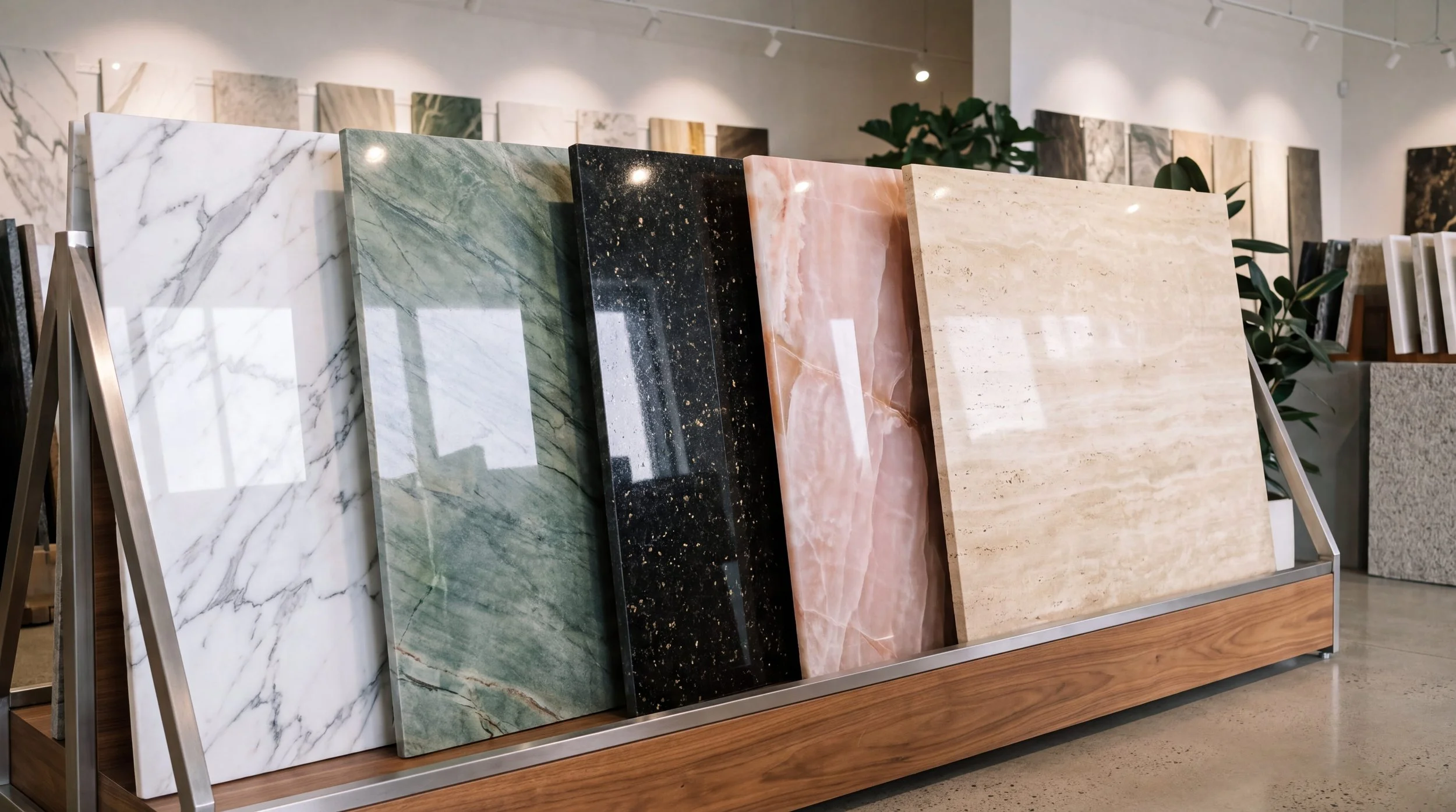
Testing Quartzite Labels for Accuracy
A few key tests allow identification of true quartzites over misleading impostors. Each test provides valuable insights that help you avoid costly mistakes.
Acid test: The Test Vinegar or Lemon Juice Method
Apply several drops of white vinegar or lemon juice to an inconspicuous spot on the slab. Wait 10-15 minutes. If it is quartzite the liquid should leave zero marks neither dullness nor etches or stains. Marble and dolomite react visibly, showing signs of etching from acid contact on calcite minerals. This is the definitive field test that all potential quartzite purchasers should use. Simple and conclusive.
Scratch test method
Attempt to scratch the surface of the slab using a metal knife blade. If it is quartzite at Mohs 7 the surface should remain intact against the scratching action. No visible scratch marks or damage will occur. Marble at Mohs 3-4 yields easily to such action and shows visible signs of scratching. This test can produce false positives through surface treatments and coatings. However in conjunction with the acid test it provides a comprehensive assessment.
Visual test
True quartzite generally appears granulated, with sparkle visible at microscopic scale. Refractive effects from quartz crystals cause this visual trait. Marble tends to appear smooth, uniform, and translucent by comparison. Visual inspection remains purely supplemental, offering supplementary verification but not serving as primary confirmation.
Provenance discussion
Always ask the supplier directly about geological classification. Does the stone originate from? Which country or quarry does the material hail from? Are the stones labeled quartzite or dolomite at point of origin? Suppliers who understand their inventories should be able to give straightforward answers. If suppliers cannot provide that information there may be good reason why.
Next Steps: Testing Your Purchase
Failure of a quartzite label during acid testing reveals one of two facts: • Your stone is either genuinely quartzite with unusual characteristics;
• Or the slab is incorrectly labeled marble or dolomite.
In either case you must decide if your needs align with the properties possessed by non quartzite stones. This decision rests solely with you based on available information.
Recommendation: Where to Find Genuine Quartzite
East Coast Surfaces stocks verified quartzite in stock at their Rhode Island warehouse. Featured material includes verified quartzites such as Cristal Ibiza and Ijen Blue. Team members are happy to explain geological formation processes and expected performance metrics for materials in stock. View our quartzite selection, explore full collections, and speak to a team member regarding any slab specifics or concerns.