Why Older Rhode Island Homes Need a Different Countertop Approach Than New Builds
Rhode Island is a state unlike almost any other when it comes to residential architecture. From the salt-weathered colonial capes of Narragansett to the Victorian streetscapes of Providence's East Side, from mid-century ranches in Cranston to the shingled summer cottages that line the coast from Watch Hill to Tiverton — the housing stock here has a depth of character, age, and structural quirk that you simply don't find in newer construction markets. That character is exactly what makes Rhode Island homes so desirable. It's also what makes renovating them — particularly the kitchen — a fundamentally different challenge than updating a home built in 2012.
When homeowners in older Rhode Island properties begin planning a kitchen renovation, the conversation almost always starts with countertops. It's one of the highest-impact, highest-visibility changes you can make. But what works perfectly in a newly constructed open-plan kitchen with level floors, plumb walls, standard cabinet heights, and modern structural supports can create real problems — aesthetic, structural, and logistical — in a home where the kitchen has been evolving, settling, and accumulating layers of history since the 1890s. Or the 1940s. Or even the 1970s.
Understanding why older Rhode Island homes demand a more nuanced approach to countertop selection and installation is the first step toward getting the result right — a kitchen that respects the history of the home while functioning beautifully for the family living in it today.
The Problem with Applying New-Build Logic to Old Homes
New construction is, in many ways, a countertop installer's dream. Walls are plumb. Floors are level. Cabinet runs are straight and consistent. Standard dimensions apply throughout. The templating process is relatively predictable, and the fabrication can proceed with confidence that the finished slabs will land flush, even, and clean.
Older homes operate by different rules entirely. A 1920s Colonial in Pawtucket may have a kitchen floor that drops half an inch from one end of the room to the other — the result of a century of wood framing settling into the soil beneath it. A 1950s ranch in East Greenwich might have cabinet boxes that were custom-built in place by a previous owner, meaning no two sections are exactly the same height. A Victorian kitchen in Providence's Federal Hill neighborhood might have walls that bow outward by three quarters of an inch at the midpoint of a run — a deviation that would be invisible to the naked eye but catastrophic if not accounted for in the fabrication.
Beyond these structural realities, older kitchens often feature architectural details that new builds don't: exposed brick walls with uneven surfaces, built-in hutches or pantry sections with non-standard dimensions, window sills that sit unusually low, plumbing rough-ins positioned in ways that no longer match current code or standard cabinet placement. All of these require custom solutions at the countertop level.
Key Insight: A countertop that looks perfect in a showroom slab is only as good as the template and installation process that brings it into your specific kitchen. In older homes, that process requires more time, more expertise, and more custom problem-solving than a standard new-build installation.
Weight, Load Bearing, and the Case for Knowing Your Cabinets
One of the most underappreciated differences between older and newer kitchen renovations is the question of weight. Natural stone countertops are heavy — genuinely, structurally heavy. A standard 3-centimeter granite or quartzite slab weighs approximately 18 to 20 pounds per square foot. An island top in a generous kitchen might weigh 600 to 800 pounds before it's ever set in place.
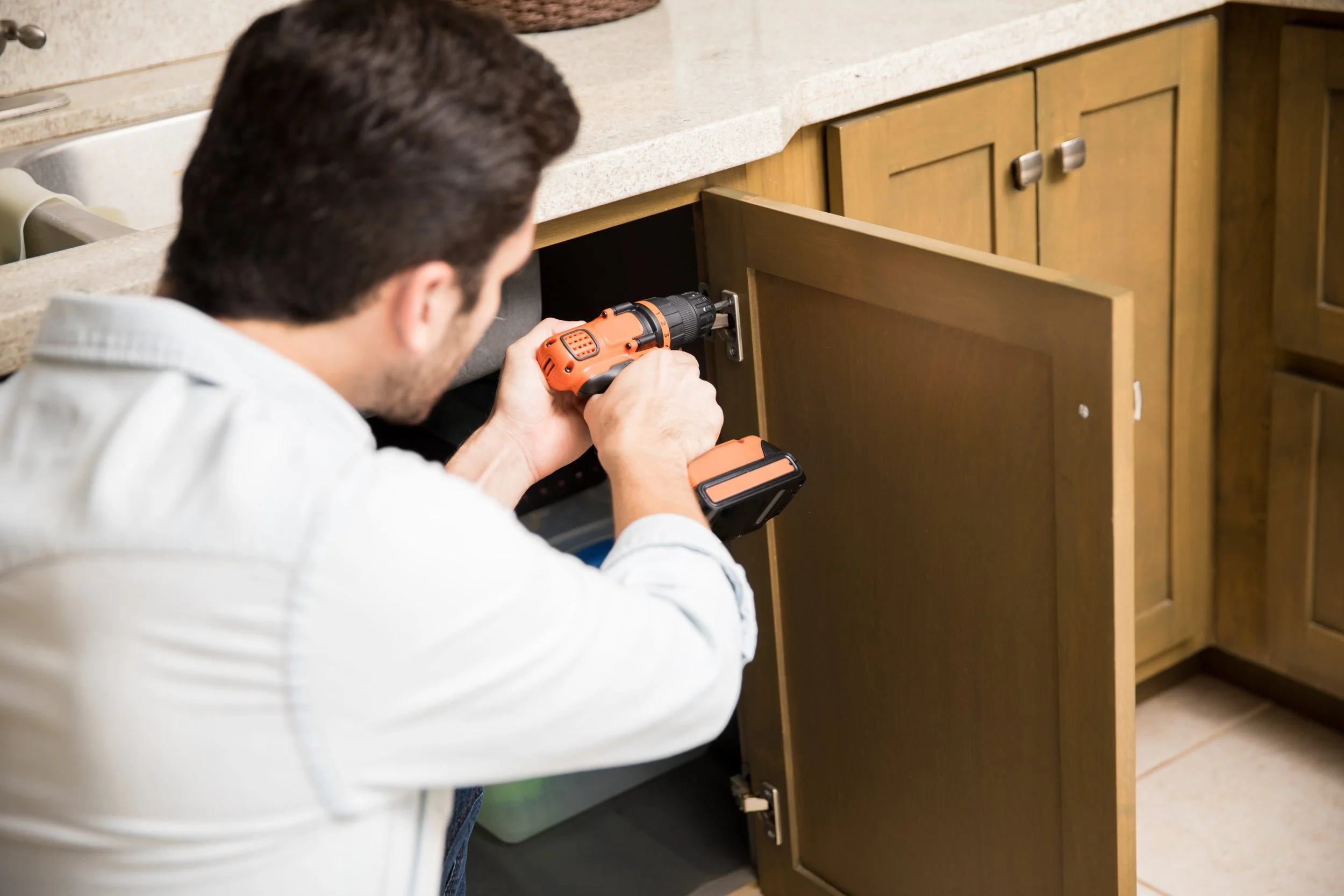
In a new build, the cabinet manufacturer has engineered their boxes to handle this load, and the subfloor beneath the kitchen has been designed with stone countertop weights in mind. In a home from 1935 with original oak cabinet boxes, original floor joists, and potentially a modified structural layout from a 1970s renovation, the calculation is very different.
Before committing to a heavy natural stone installation in an older Rhode Island kitchen, it's worth having a conversation — with your contractor, your cabinet maker, or your countertop fabricator — about the structural condition of the existing cabinetry and the subfloor beneath it. In some cases, reinforcing the cabinet boxes or adding supplemental floor support before the countertop installation is the right call. In others, the answer might be to choose a lighter material altogether.
Engineered quartz is a popular choice in these situations, as it is typically slightly lighter than an equivalent natural stone slab and available in a vast range of colors and patterns. It's also completely non-porous, which matters in older kitchens where sealing maintenance may have been inconsistent over the years.
Why Precise Templating Is Non-Negotiable in Older Kitchens
Templating — the process of taking precise measurements of your kitchen countertop area before fabrication begins — is important in any installation. In an older Rhode Island home, it is absolutely critical. The difference between a template taken with digital precision and one done casually can mean the difference between a countertop that fits perfectly and one that reveals gaps along the back wall, creates visible seams in awkward positions, or simply doesn't close flush with the side panels of your cabinets.
Modern templating uses laser measurement tools that capture thousands of data points across a kitchen surface, accounting for the subtle irregularities in older walls and floor surfaces that tape measures simply cannot capture. This data feeds directly into CNC fabrication equipment that can cut stone to tolerances of a fraction of a millimeter — producing a result that fits the actual geometry of your kitchen rather than some idealized version of it.
Seam placement is another area where experience with older homes pays dividends. In a newer kitchen with long, straight runs of consistent depth, seam placement is largely a matter of slab size and material economy. In a kitchen with bays, angles, built-ins, and non-standard dimensions, seam placement becomes a design decision that requires careful thinking about sightlines, traffic flow, and which areas of the countertop will be most visible from the main vantage points in the room.
Matching the Material to the Architecture: What Works in Older Rhode Island Homes
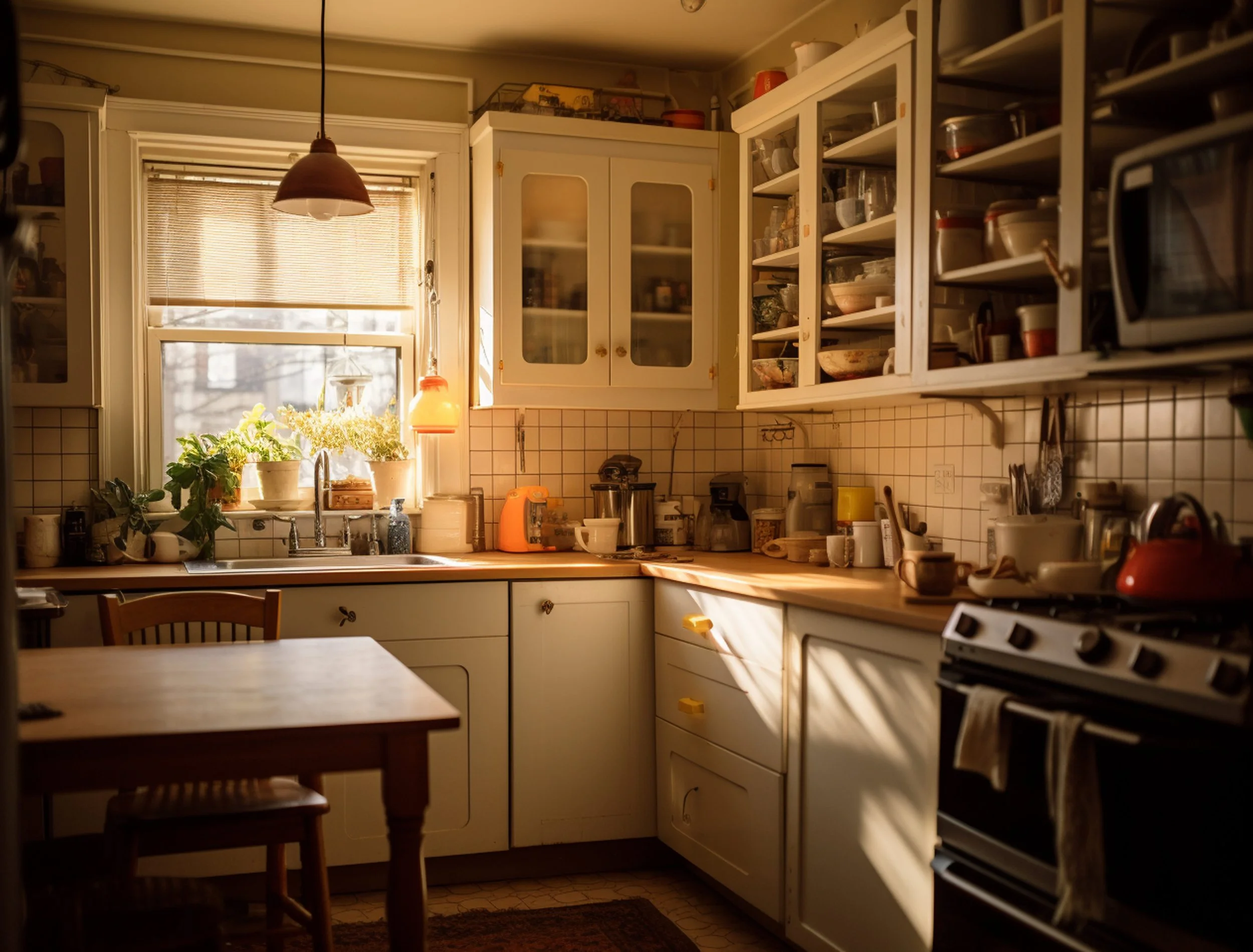
Beyond the structural and technical considerations, there's the question of character. The best countertop renovations in older homes don't just function well — they feel right. They honor the weight and history of the space without trying to make a 1910 Colonial kitchen look like a 2024 new construction showroom.
Granite has been the classic choice for older Rhode Island homes for decades, and for good reason. Its natural variation, depth of color, and visual warmth complement the wood floors, plaster walls, and architectural millwork of historic kitchens beautifully. Darker granites — Black Pearl, Ubatuba, Baltic Brown — are particularly well-suited to kitchens with warm wood tones and traditional cabinetry.
Marble is another material with deep roots in New England architecture. Historically, marble was used in high-end Rhode Island homes as both a functional and decorative surface — in butler's pantries, pastry areas, and formal dining rooms. Reintroducing marble into a historic kitchen is less an anachronism than a homecoming, particularly in white or soft grey tones that reference the original period.
Soapstone is arguably the most historically authentic choice for a truly old Rhode Island kitchen. Soapstone countertops and sinks were common in New England homes through the early twentieth century, and there's a reason: the material's dense, non-porous surface is completely heat-resistant, never needs sealing, and develops a rich, natural patina over time that seems to absorb and reflect the history of the kitchen around it.
For homeowners who want the look of stone with maximum durability and minimal maintenance — particularly in kitchens that will be heavily used by families — quartzite offers an excellent middle path. Harder than granite, available in a wide range of natural patterns from dramatic to subtle, and with the authentic beauty of natural stone, quartzite reads as genuinely traditional while performing like a modern material.
"In an older home, the countertop isn't just a surface — it's a statement about how deeply you understand the character of the space you're renovating."
Edge Profiles: Where the Old Home Aesthetic Lives or Dies
One of the most overlooked details in any countertop renovation — and especially in older homes — is the edge profile. The edge is the visual transition between the top surface and the cabinet below, and it speaks volumes about the relationship between the new countertop and the existing architecture. The wrong edge profile on a historic kitchen can make an otherwise beautiful installation look incongruous and out of period.
In older Rhode Island homes, the most harmonious edge profiles tend to be those with traditional lineage: the ogee, the dupont, the cove, and the classic beveled eased edge all carry a period sensibility that complements colonial, Victorian, and early twentieth-century architecture. Sharp, mitered waterfall edges and ultra-thin contemporary profiles, while stunning in the right modern setting, can feel jarring in a kitchen that was built before the First World War.
East Coast Surfaces offers a comprehensive range of edge and corner profiles to suit any architectural style and personal preference. During your consultation, the team will help you choose an edge that not only matches your aesthetic vision but also works well with the specific material you've selected — because not every edge profile performs equally well in every stone type.
Getting It Right: The Value of Working with Someone Who Knows Rhode Island
The older the home, the more important it is to work with a fabricator who has actual, hands-on experience with the specific challenges of Rhode Island's housing stock. Someone who has templated a 1920s kitchen in Warwick, installed marble in a Federal Hill Victorian, and navigated the structural peculiarities of a coastal cottage in Westerly knows things that can't be learned from a brochure.
They know which materials photograph well in low-ceiling kitchens. They know how to script a seam so it disappears into a natural vein rather than fighting it. They know how much shimming is acceptable before the aesthetics suffer. They know how to talk to you about what's possible given the specific geometry of your space — honestly, and with genuine respect for the home you're renovating.
East Coast Surfaces brings deep Rhode Island roots and genuine fabrication expertise to every project — from modest kitchen refreshes in older ranch homes to full historic restoration installations in the state's most architecturally significant properties. Browse the full surface collection, explore finished project photography, and when you're ready, reach out to start the conversation about what your older Rhode Island kitchen actually needs.