When it Comes to Black Countertops, the Look Goes Deeper Than Style
Black countertops affect a kitchen differently. They sharpen plain cabinetry. They highlight natural woods' tone and grain. They add richness no lighter colors can match.
From sleek black granite to rustic leathered stone, black countertops blend equally well into modern and traditional kitchens. They are especially appealing for owners looking beyond ubiquitous combinations of whites and grays.
But then comes an obvious question before any decision-maker: can black countertops serve a family every day?
It all depends on the specific material, finish, lighting conditions, and upkeep involved. Yes, black countertops may be fantastic choices. Just do not expect them to maintain themselves effortlessly after purchase.
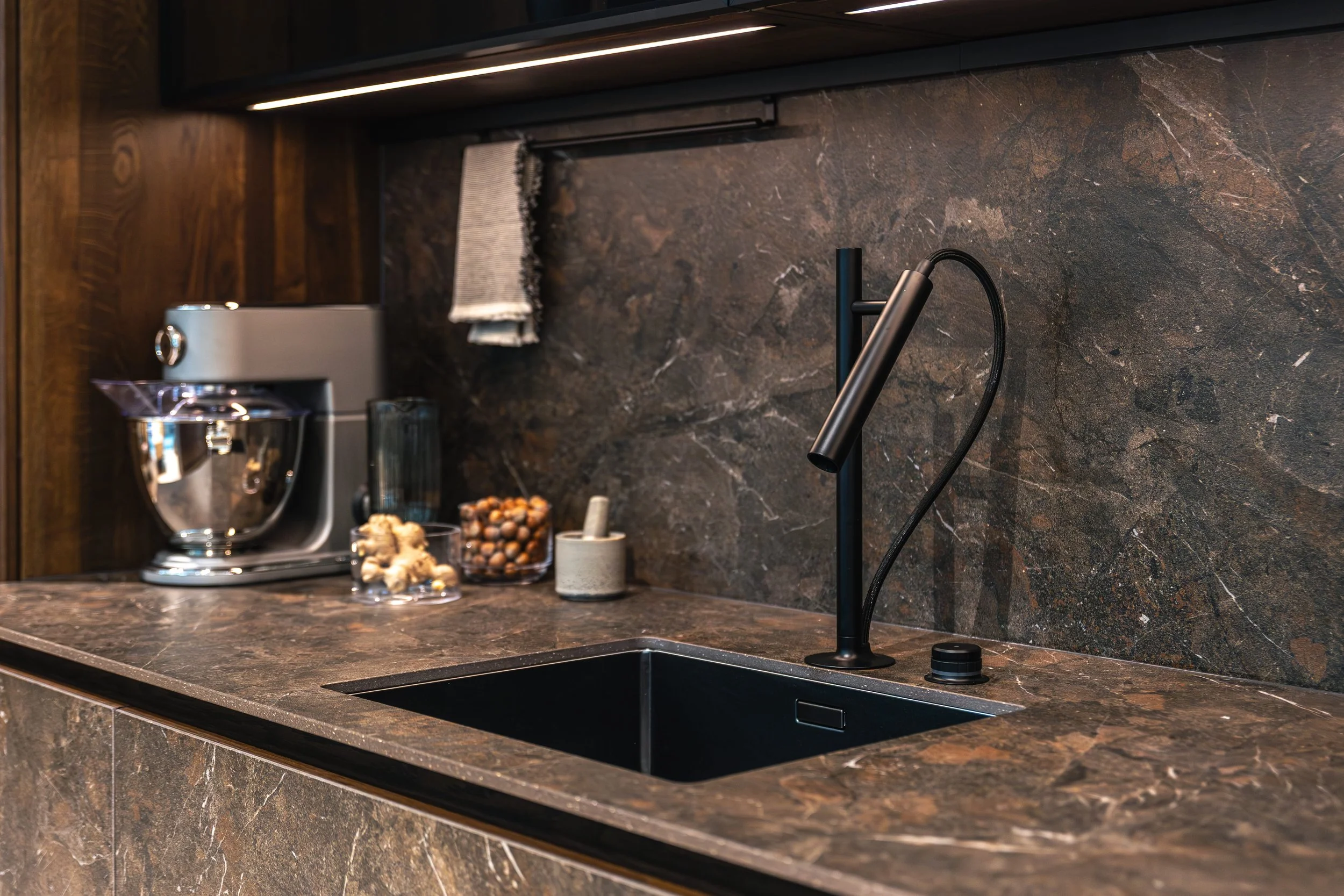
1. What Makes Modern Homeowners Consider Black Countertops?
Black used to stand out in kitchens. Today's black countertops stand out differently, mixing dark countertops with light cabinets, rich wood, tactile textures, and brushed metals instead of sticking only to black-and-white combinations.
This versatility is part of the appeal.
There are even variations within popular black granite countertops. Mineral crystals give some slabs a unique look. Others display small speckles. Some exhibit dynamic patterns under lighting changes.
That kind of range means more flexibility than uniformity in black kitchen countertops. Up-to-date reports on upcoming kitchen trends also highlight impressive black surfaces. They continue as carefully chosen statements rather than default selections, however, with a focus on finding a suitable dark countertop first.
2. Which Black Countertop Material Should You Choose?
Black countertops are not all identical products. Understanding the key distinctions allows homeowners to pick a material compatible with their lifestyle and preferences.
Black granite countertops originate from natural rock. They vary widely in terms of consistency, coloration, porosity, and composition. Some types feature little variation in appearance. Some develop white patches.
Generally regarded as a resilient kitchen countertop material, granite requires occasional sealing depending on its particular composition and brand.
East Coast Surfaces provides several black granite countertop choices, including Absolute Black, Black Pearl, Black Forest, Jet Mist, and Belvedere. Finishes include polished, honed, and leathered styles.
Black quartz countertops represent manufactured engineered stone. They come from crushed stone bound by resins. This flexibility creates countless colors and designs.
An advantage of a black quartz countertop is its consistent coloring and seamless construction. Its disadvantage lies in containing plastic-like compounds and potential reactions to prolonged heat exposure.
Dark, textural natural stone
For those desiring a variation of black kitchen countertops, consider adding a trace of natural stone colors or mineral veining. In essence, any dark stone qualifies as such.
View the granite countertop gallery at East Coast Surfaces for the range of natural stones and accompanying finishes.
3. Will Black Countertops Collect Dust, Fingerprints, and Spots Easily?
This tends to be homeowners' biggest concern regarding dark surfaces.
Dark countertops can reflect certain residues better. According to finish type, expect some black kitchen surfaces to show traces of dust, dried stains from splashing water, fingerprints, and mineral buildup due to hard water.
However, these effects differ from surface to surface.
Black polished countertops possess high reflectiveness. This quality will emphasize fingerprints, dirt smears, and water spots under strong light sources. Alternatively, honed or leathered countertops retain low shine.
Consider the ambient condition of each kitchen as well. Cooking activity, frequent water usage, presence of hard water increase maintenance responsibilities.
Daily cleaning should include soft microfiber rags and appropriate cleaning products for the respective countertop material. Refer to manufacturer guidelines.
4. How Important Is the Finish of Each Black Kitchen Surface?
Finish significantly influences black countertop performance and aesthetics.
Black polished finish. Highly reflective surface. Strong emphasis on black color tone. Suitable for contemporary kitchens. Tends to highlight smudges and stains.
Black honed finish. Slightly less reflective than polished. Creates softer aesthetic compared to polished finish.
Black leathered finish. Provides additional texture while minimizing reflectivity of polished stone.
Combine considerations of finishes with actual characteristics of the selected stone type.
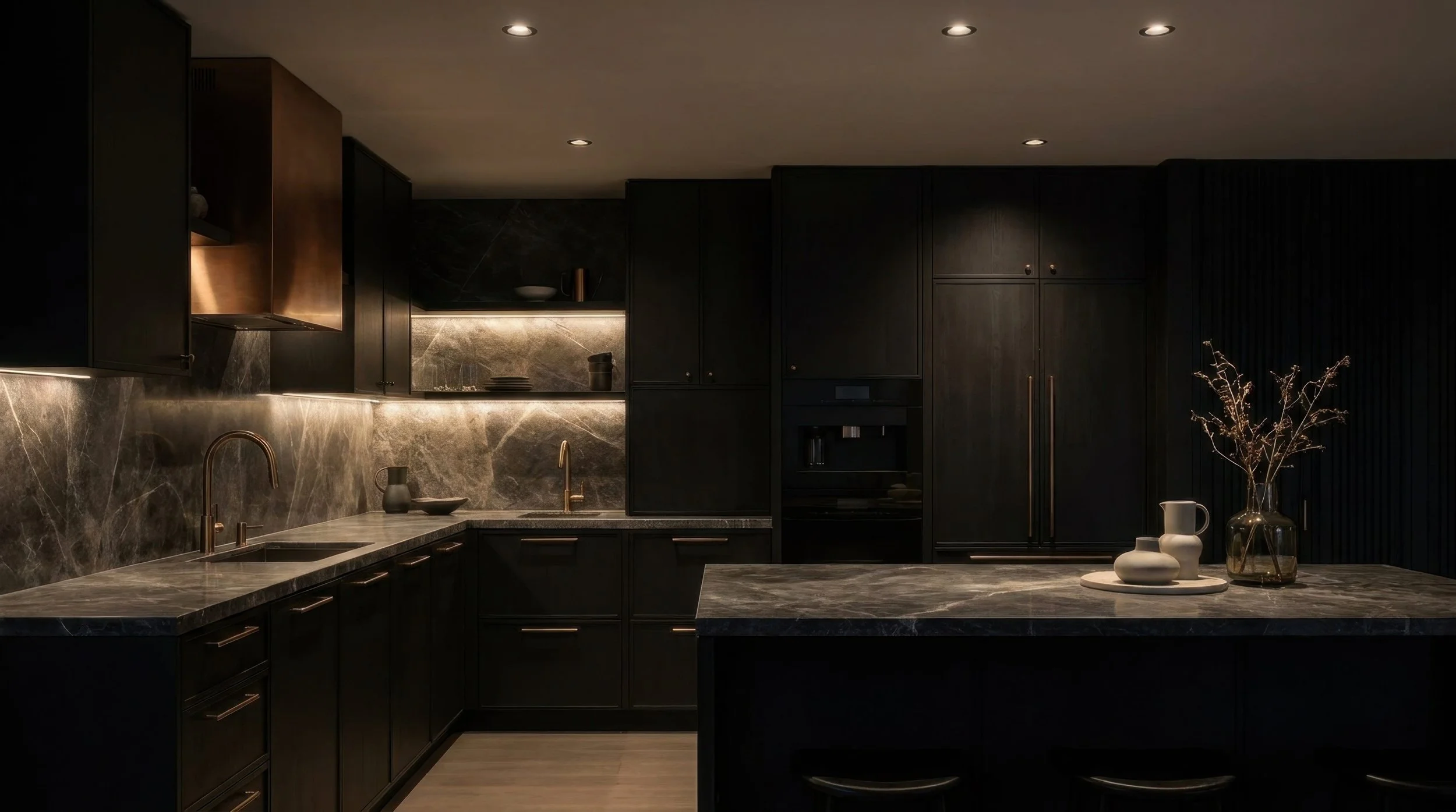
5. Which Cabinet Colors Complement Black Countertops Best?
Black countertops pair well with a broad palette of cabinet hues. Different colors modify the appearance of a kitchen differently.
Black with white cabinets. Strong contrast between cabinet doors and countertop surface.
Consider using backsplash or warm flooring as transitional elements.
Combination of natural wood cabinets and black countertops. Wooden cabinets introduce warmth to neutral countertop. It prevents overwhelming starkness.
Matching gray cabinets complement black countertops in a sleek fashion. Balanced shades result in harmonious appearance.
Navy blue and green cabinets. These colors create an intense look but need proper illumination in kitchens.
Cream cabinets provide a warmer alternative to white counterparts alongside black countertops.
Repetition of black accents throughout kitchens in various features adds consistency to designs.
6. How Suitable Are Black Countertops for High-Traffic Areas?
Again, black countertops could be appropriate. Properly choosing a material based on personal lifestyle ensures longevity.
Consider granite as a robust natural stone suitable for high activity zones. Opt for engineered quartz for consistent look, minimal porosity, and easy manufacturing. Other natural stones provide distinct visual effects.
Regardless of selected surfaces, always use cutting boards. Wipe spills promptly. Refrain from placing hot kitchen utensils directly onto a countertop. Follow manufacturer recommendations. Remember, black color does not guarantee impermeability, scratch resistance, or maintenance ease. Actual material does matter more.
For detailed instructions, review the countertop care guide published by East Coast Surfaces.
7. Which Aspects Require Attention When Purchasing a Black Countertop?
First of all, observe actual stone slabs. Notice mineral crystals, veins, patterns, reflections, texture, and natural variations in coloring under different lighting sources.
Inquire about sealing requirements, recommended cleaning supplies, and durability of chosen countertop surface under kitchen conditions. Compare samples of stone surfaces against cabinets, walls, and flooring.
Never rely exclusively on images provided by retailers or manufacturers. Dark surfaces tend to appear different in showrooms and at home in natural light.
Conclusion
Choosing black kitchen countertops represents an opportunity. The trick consists in focusing beyond color.
Explore the capabilities of maintenance, available lighting conditions, compatibility with cabinets, functionality, and cooking habits. Prioritize those factors over pure appearance.
East Coast Surfaces sells granite and other countertop materials, including multiple black stones. An in-person visit to our Cranston showroom makes the task simpler and easier to accomplish correctly.