How Countertop Finishes Change the Look and Feel of Stone
Most homeowners walking into a stone yard for the first time focus entirely on one thing: the slab itself. The color, the movement, the pattern of veining or crystalline structure that makes each piece of natural stone unique. These things matter enormously — but they tell only half the story of how a countertop will ultimately look in your home. The other half is the finish.
The finish applied to the surface of a stone countertop — whether it's polished to a mirror-like gleam, honed to a soft matte, leathered to a tactile, organic texture, or brushed to something between — fundamentally changes how the stone reads visually, how it performs practically, how it ages over time, and how it needs to be cared for. Two slabs cut from the same block of granite, finished differently, can look so distinct that they seem like entirely different materials.
This is one of the most important — and most underexplored — decisions in any countertop project. Understanding the full range of finish options available to you, and how each one will behave in your specific home, is what separates a countertop you'll love in ten years from one you'll be explaining to guests.
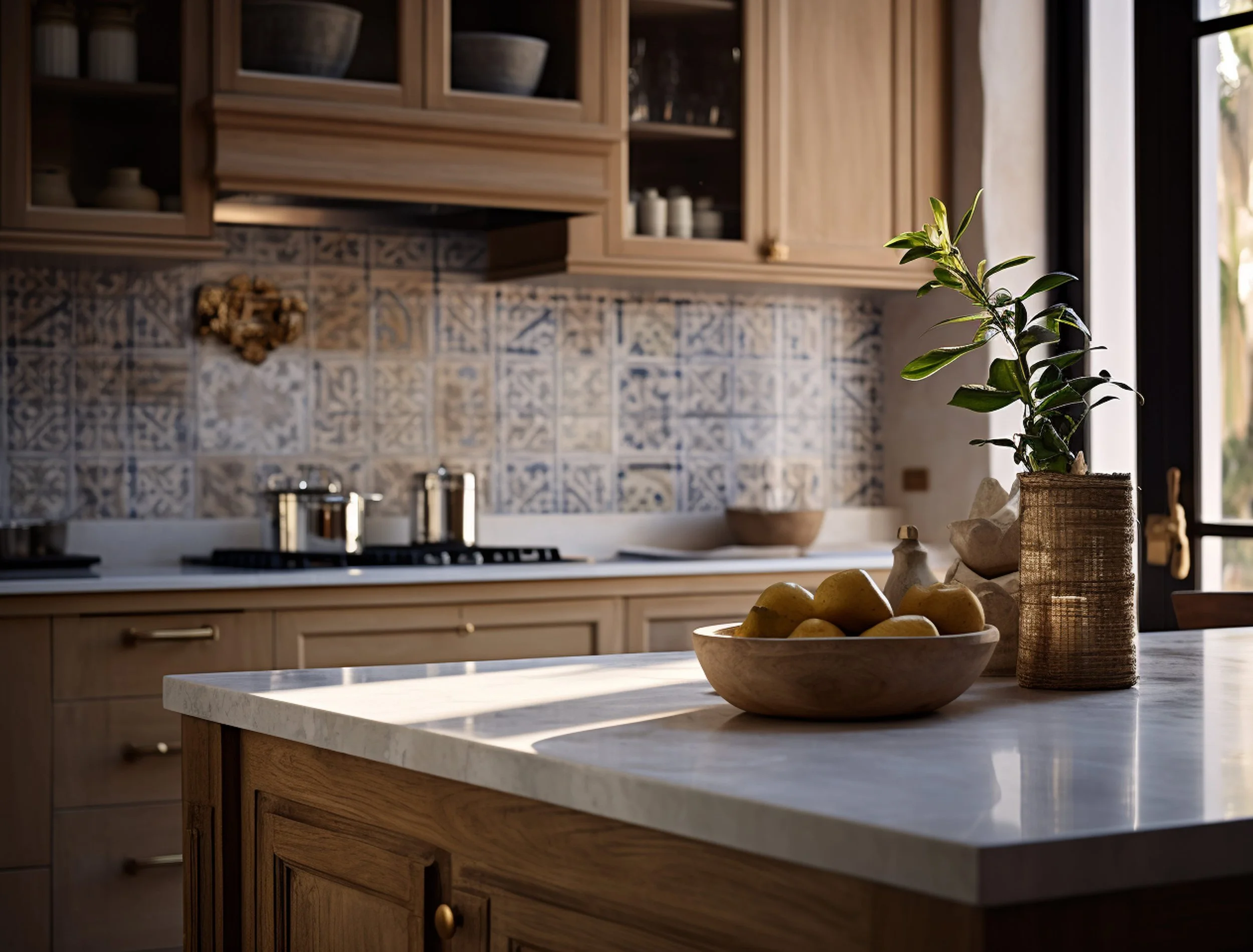
The Polished Finish: High Gloss, High Drama, High Reflectivity
Polished is the finish most people picture when they think of stone countertops — and it's the finish that most slabs are displayed in at stone yards, because it shows the material at its most visually dramatic. The polishing process involves progressively finer grinding and buffing of the stone surface until it achieves a mirror-like reflective sheen that brings out the deepest colors, sharpest contrasts, and most vivid veining patterns in the stone.
A polished black granite doesn't look like a matte black surface — it looks like a still, deep pool. A polished white marble doesn't look like a painted surface — the light penetrates slightly into the stone, reflecting back in a way that gives it an almost translucent luminosity. Polished stone has a visual weight and richness that no other finish can fully replicate.
Practically speaking, polished finishes also offer the densest surface of any mechanical finish applied to natural stone — the buffing process closes the surface pores to their minimum, making the stone less susceptible to staining from oils and acidic liquids. For this reason, polished surfaces are often recommended for kitchens where sealing maintenance may be sporadic, or where heavily pigmented liquids (red wine, dark berries, tomato sauce) are regularly handled.
The tradeoff of a polished finish is visibility of use. The high reflectivity that makes polished stone so beautiful in a showroom also means that every fingerprint, water droplet, light scratch, and surface smear is clearly visible under direct light. In a busy kitchen with children, frequent cooking, and constant surface contact, a polished finish requires regular wiping to maintain its appearance. Some homeowners find this manageable and worth it; others find it quietly maddening over time.
Polished Finish Is Best For: Dramatic visual impact, darker stones (where depth of color is maximized), kitchens where maintenance is not a concern, and any application where you want the stone to be the clear focal point of the room.
The Honed Finish: Soft, Sophisticated, and Increasingly Popular
A honed finish stops the polishing process before the surface reaches full reflectivity, leaving behind a smooth, matte or satin surface that reveals the color and texture of the stone without the high-gloss sheen. The result is a surface that looks more natural, more relaxed, and — depending on the stone — more architectural in quality.
Honed marble is perhaps the most discussed iteration of this finish in current design conversations. Polished marble is undeniably spectacular, but it shows every etch mark, water ring, and acid contact point with unforgiving clarity. A honed marble surface, by contrast, integrates those same etch marks into the overall matte texture of the stone — making them far less visible and allowing the material to age with considerably more grace in a working kitchen.
Marble in a honed finish has experienced a significant surge in popularity among Rhode Island homeowners renovating older kitchens, precisely because it reads as both historically authentic — marble was the material of New England's finest historic homes — and practically livable in a way that polished marble sometimes isn't.
Honed granite and quartzite are also seeing increased interest from homeowners who want a more understated, less "kitchen showroom" aesthetic. A honed grey quartzite, for example, can look almost architectural — as though the stone were part of the building itself rather than something applied to it.
The practical consideration with honed finishes is that the slightly more open surface (compared to a full polish) can be marginally more susceptible to staining without regular sealing. This is particularly true for honed marble and lighter-colored honed granites. Consistent sealing — once or twice a year depending on use — addresses this vulnerability effectively and should be factored into your maintenance planning.
Honed Finish Is Best For: White and light-colored marbles in kitchens (dramatically reduces visible etching), softer aesthetic goals, older home renovations seeking a period-appropriate look, and homeowners who prefer a more restrained visual presence from their countertop.
The Leathered Finish: Texture, Warmth, and a Surface Like No Other
The leathered finish — sometimes called brushed — is the most distinctive of the commonly available stone surface treatments, and the one that generates the most surprised, delighted reactions from homeowners encountering it for the first time. Unlike polished or honed, which are purely about reflectivity level, leathering is a textural process: the surface is worked with diamond-tipped brushes that accentuate the natural pitting and crystalline character of the stone, leaving behind a surface that has genuine topographical texture you can feel with your fingertips.
Run your hand across a leathered granite and you feel something organic — not rough or sharp, but undulating, warm, and tactile in a way that polished stone simply isn't. The texture catches light from different angles at different times of day, giving the countertop a living, shifting quality that flat finishes can't replicate.
Visually, leathering intensifies the color of the stone — bringing out the deep greens, blacks, golds, and bronzes in granites and quartzites that can look flatter in a honed finish. The texture also adds depth: veining and crystalline structure that reads as flat in a polished or honed slab takes on a three-dimensional quality in a leathered surface.
From a practical standpoint, the leathered finish is exceptionally forgiving. Fingerprints, water spots, and light scratches essentially disappear into the texture of the surface — making it one of the lowest-maintenance finishes available for a working kitchen. The textured surface also provides a small amount of grip, reducing the chance of items sliding across the counter.
Leathering works best on coarser-grained stones — granites and quartzites with visible crystalline structure benefit the most from the process. Fine-grained stones like some marbles and engineered quartz don't respond as dramatically to leathering, and the finish isn't typically available on engineered materials.
Leathered Finish Is Best For: Dramatic dark granites (Ubatuba, Black Pearl, Cosmic Black), earthy quartzites, kitchens where fingerprints are a consistent frustration with polished surfaces, and any project where you want the countertop to feel genuinely tactile and alive.
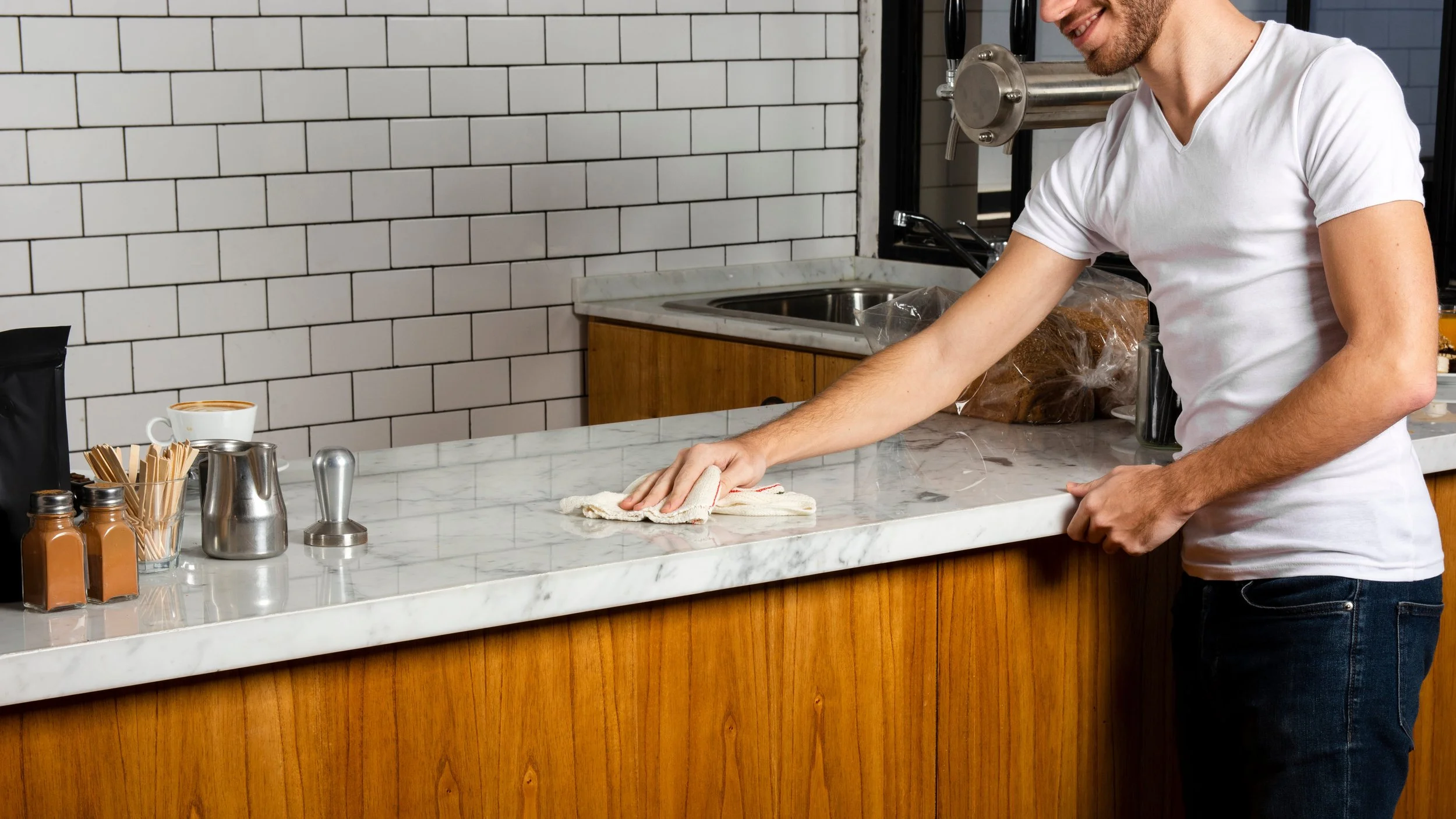
Brushed, Sandblasted, and Flamed: The Less Common but Worth Knowing Options
Beyond the three dominant finishes, a range of more specialized surface treatments exist that are worth understanding for specific applications.
Brushed / wire brushed: Similar to leathered but with a slightly finer, more linear texture. Particularly popular on quartzite, where it accentuates the natural layering of the stone without the pronounced topography of a full leather treatment.
Sandblasted: A uniform matte texture achieved by blasting the surface with fine abrasive particles. Creates a consistent, flat matte appearance without the tactile texture of leathering. Often used in commercial applications but occasionally in residential outdoor counters.
Flamed / thermal: Achieved by applying intense heat to the stone surface, causing crystals to burst and creating a rough, highly textured surface. Exclusively used in outdoor applications — patios, fire pit surrounds, outdoor kitchen counters — where the texture also improves slip resistance.
How Finish Choice Interacts with Your Specific Stone Material
| Stone Material | Best Finish Options | Avoid |
|---|---|---|
| Marble | Honed (best for kitchens), Polished (bathrooms) | Leathered (limited effect) |
| Granite | All three — polished, honed, leathered all work well | No strong exclusions |
| Quartzite | Leathered or brushed (stunning), Honed (elegant) | None — very versatile |
| Soapstone | Honed only (inherently matte material) | Polished — not applicable |
| Engineered Quartz | Polished or honed (manufacturer options) | Leathered — not available |
The Right Finish Is a Design Decision, Not an Afterthought
The finish you choose will be one of the most sensory aspects of your countertop — you'll see it under morning light and evening candlelight, run your hands across it while cooking, notice it in your peripheral vision while having coffee at the kitchen table. Getting it right means thinking about aesthetics, lifestyle, and how you actually use your kitchen rather than simply defaulting to whatever finish the slab happens to be displayed in at the yard.
East Coast Surfaces carries slabs in multiple finishes across their stone inventory, and their team regularly helps homeowners navigate these decisions with hands-on samples and honest guidance rooted in real-world kitchen experience. Explore finish and edge options, browse the full surface gallery, and get in touch to talk through which finish will serve your specific material, kitchen, and lifestyle best.