It's one of the most common design questions in a kitchen renovation: should the countertop and backsplash match, coordinate, or intentionally contrast? Get it right, and the kitchen feels cohesive and intentional. Get it wrong, and even beautiful materials can fight each other. There's no universal answer — but there are principles that make this decision a lot clearer. Here's how to think through it.
First: Understand What Each Surface Is Doing
Your countertop is a workhorse. It's horizontal, it takes abuse, and it's often seen from above and at an angle. It anchors the kitchen visually and functionally.
Your backsplash is a vertical canvas. It fills the space between your countertop and your upper cabinets — typically 18 inches of visible wall — and it's seen straight-on. It has more freedom to be decorative, textural, or expressive than the countertop below it.
These two surfaces play different roles, which means they don't need to match — but they do need to relate.
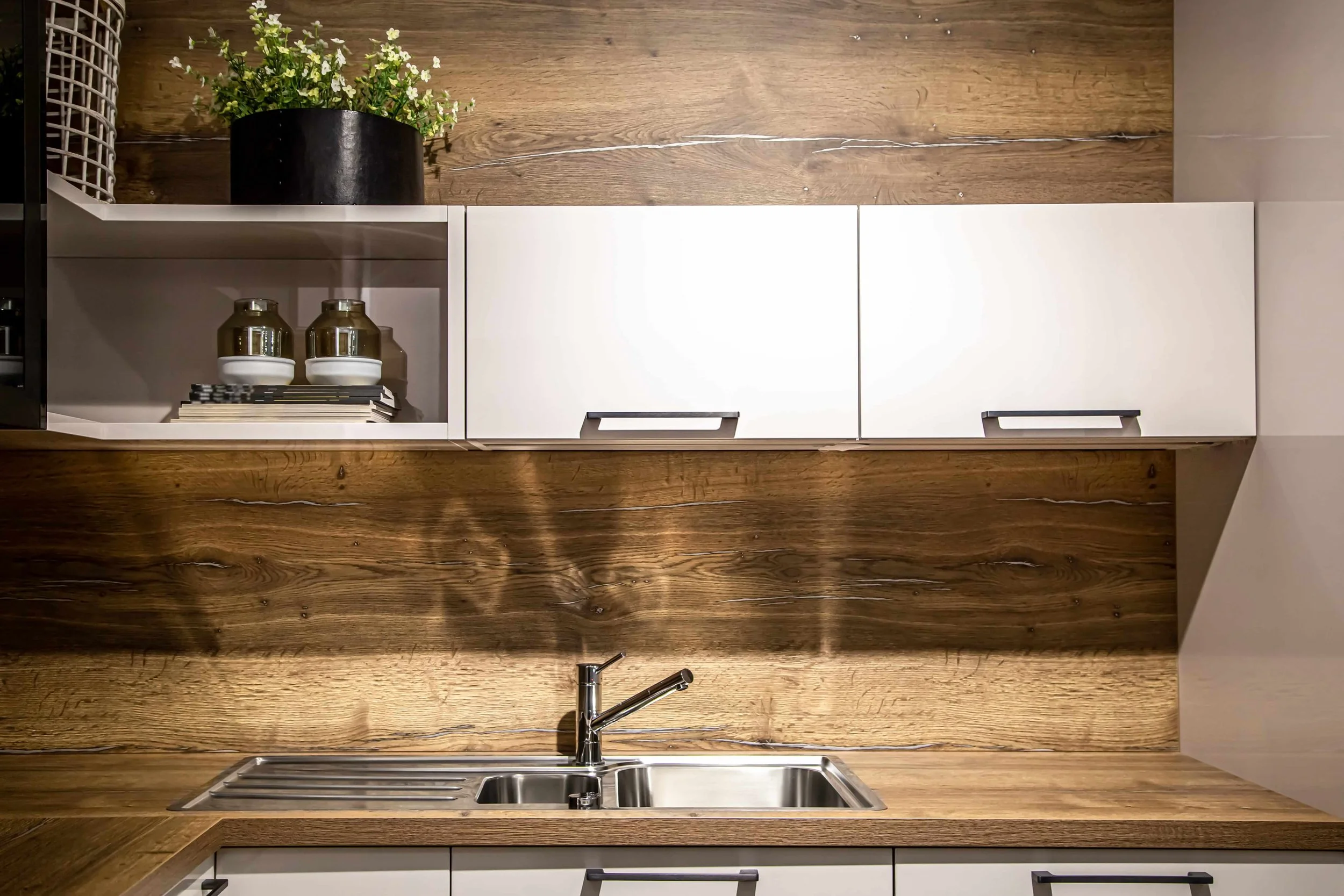
When Matching Makes Sense
Matching the countertop and backsplash — using the same stone or a closely coordinated material — creates a seamless, unified look. It reads as calm, luxurious, and intentional. Think of a full slab marble countertop with a marble tile or slab backsplash in the same stone: the veining carries through the vertical and horizontal surfaces, and the kitchen feels like one continuous design.
This approach works especially well when:
You have a busy or dramatic stone. A heavily veined quartzite or marble is already making a strong statement. A matching or tone-on-tone backsplash lets the stone be the hero without introducing visual competition. Adding a contrasting pattern on top of an already expressive stone can feel chaotic.
You want the kitchen to feel larger. Matching surfaces reduce the number of visual "breaks" the eye registers. A continuous material — especially in lighter tones — makes a space feel more expansive.
The cabinets or flooring are complex. If your cabinetry has visible wood grain, mixed finishes, or distinctive hardware, the countertop and backsplash can serve as a calming backdrop rather than another layer of competition.
At East Coast Surfaces, we often see this approach paired with our marble selections — Calacatta Manhattan, Mont Blanc, and Paonazzo are favorites for full-surface design statements.
When Contrast Creates the Magic
A contrasting backsplash is a chance to introduce color, texture, or pattern that the countertop doesn't need to carry. It's a second layer of design, not a contradiction of the first.
Contrast works well when:
Your countertop is quiet. If you've chosen a consistent engineered quartz, a calm granite, or a matte soapstone, the backsplash has room to be expressive. An artisan tile, a graphic cement pattern, or a warm terracotta can bring the personality the countertop deliberately withholds.
You want to define zones. In open kitchens where the backsplash is one of the few vertical surfaces to anchor the cooking area, a contrasting material clearly marks the kitchen's identity within a larger space.
The cabinetry is neutral. White, off-white, and gray cabinet finishes leave the backsplash free to add warmth, color, or texture without competing with anything above or below.
A word of caution: contrast for its own sake isn't a design strategy. If you're choosing a backsplash that's wildly different from your countertop, make sure they share at least one design element — a color pulled from the stone's veining, a tone that relates to the cabinet finish, or a texture that complements the stone's surface. That shared thread is what makes contrast feel intentional rather than accidental.
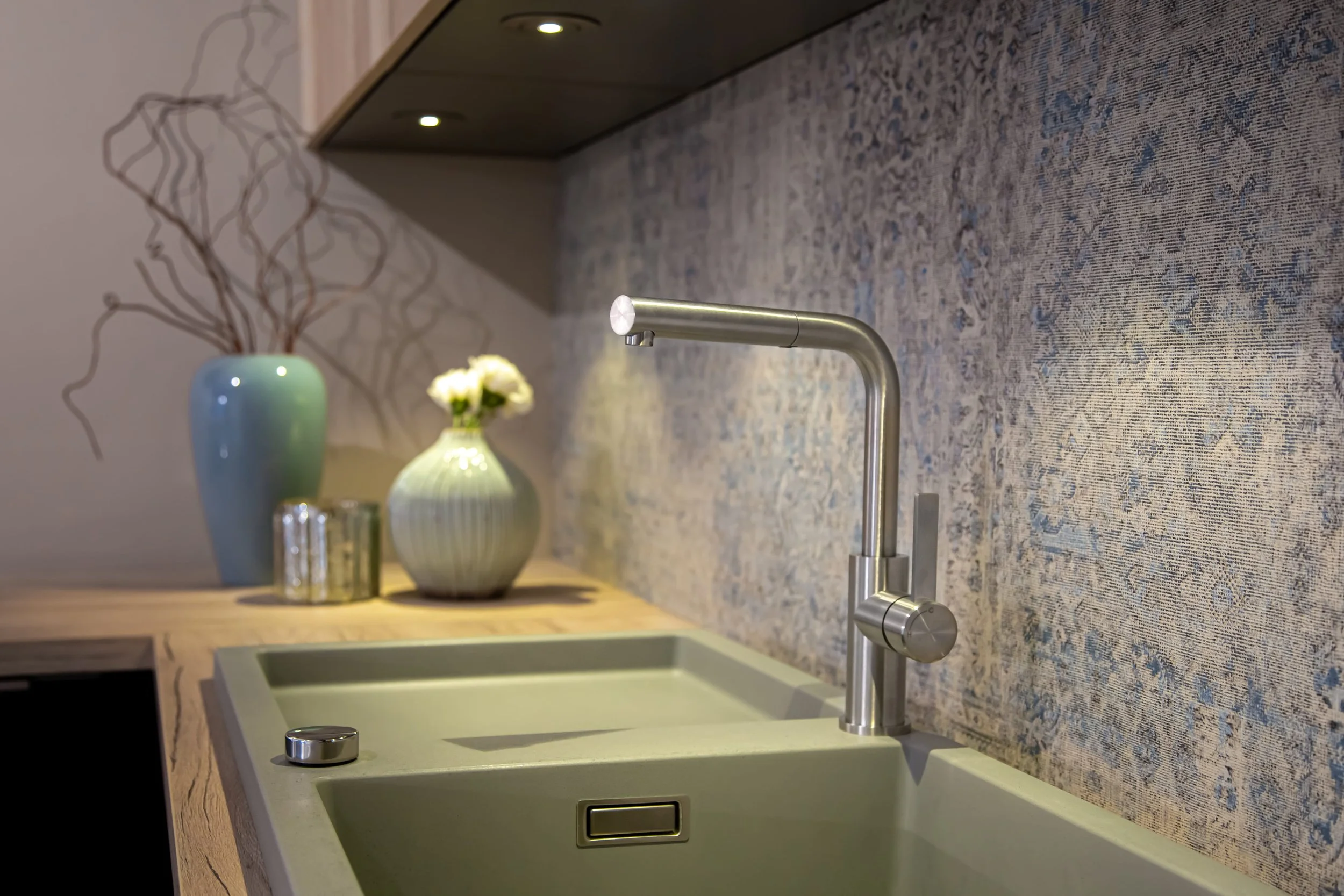
The Third Path: Complementary Materials
Between "perfectly matched" and "boldly contrasting" is a large middle ground — and honestly, it's where most great kitchens live.
Complementary means the materials relate without repeating. Some examples:
A warm-toned quartzite countertop paired with a natural limestone mosaic backsplash — same stone family, different format
A cool white engineered quartz countertop with a pale blue or gray handmade tile — colorcoordinated, not matched
A Dekton or porcelain countertop with a natural stone backsplash that picks up one of the engineered material's tones
This approach gives you design freedom without the risk of mismatch, and it's particularly forgiving if your renovation is happening in phases — choosing complementary (rather than identical) materials leaves room for evolution.
Practical Considerations That Shape the Decision
Beyond aesthetics, a few practical questions are worth asking:
How easy is the backsplash to clean? Large-format stone slabs are easier to wipe down than small tiles with grout lines. If your backsplash is directly behind the cooktop, material choice matters for maintenance.
What's the light like in the space? Natural light shows the true color and movement of stone. Under artificial lighting, some stones warm up while others cool down. Look at your materials together in the actual light conditions of your kitchen before committing.
What's your tolerance for visual complexity? If you're the kind of person whose eye wants to rest in the kitchen, lean toward coordination and calm. If you love layered, collected interiors with multiple visual points of interest, contrast will feel at home.
Conclusion
The biggest mistake in countertop and backsplash planning is choosing them at different times, from different sources, without holding them up together. If you're renovating with East Coast Surfaces, bring a tile sample to your slab selection — or bring your shortlisted stone options to your tile showroom. The decisions are better made in conversation with each other.
Our sales team at East Coast Surfaces is also happy to look at your backsplash options alongside our surfaces inventory and give you an honest read on how they're working together.
Explore our countertop options | Browse finish and edge options | See how it all comes together in our gallery | Get in touch