Why Some Countertops Need Sealing and Some Don't
Walk into a stone yard and ask about a particular slab, and there's a good chance the salesperson will mention sealing at some point — either to reassure you that the material you're considering requires very little of it, or to be upfront that the material you love will need it regularly. Walk into a quartz showroom and the subject may not come up at all. The variation in messaging around sealing is one of the most confusing aspects of countertop shopping — and the confusion is made worse by the fact that most of the explanations people receive are incomplete.
Why do some countertops need sealing and others don't? The answer lies in material science — specifically in the concept of porosity — and understanding it properly will not only make your material selection more informed, but will also help you maintain whatever surface you choose with confidence rather than anxiety.
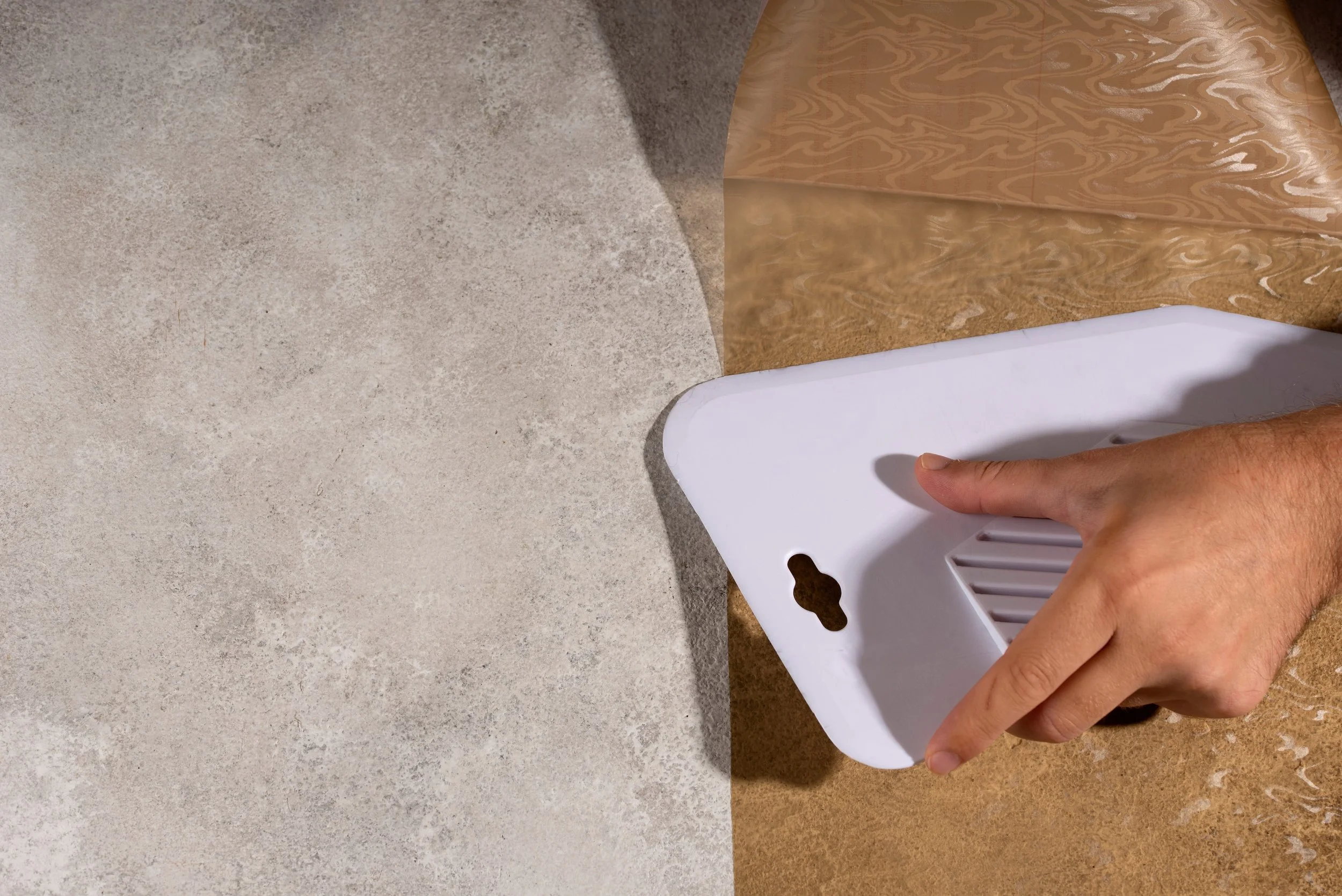
The Science of Porosity: Why Stone Absorbs Liquids
Porosity is the measure of the empty space within a material — the microscopic network of voids, pores, channels, and intergranular gaps that exist between the mineral grains or crystalline structures of a substance. In a highly porous material, these voids are numerous and well-connected, creating pathways through which liquids can travel from the surface deep into the material's interior. In a very low-porosity material, the voids are minimal and disconnected, and liquid penetration is negligible.
For countertops, porosity is the single most important determinant of maintenance requirements. A porous surface absorbs liquids — and the liquids it absorbs can stain, discolor, introduce bacteria, and in some cases cause structural damage through freeze-thaw cycling in outdoor applications. The solution to surface porosity is sealing: the application of a protective compound that fills or coats the surface pores, creating a barrier between the counter surface and the liquids that contact it.
Materials that require no sealing have achieved non-porosity either through the natural conditions of their geological formation (as in the case of soapstone's dense talc composition) or through manufacturing processes that close all pore space by design (as in engineered quartz and porcelain).
The Porosity Spectrum: Where Each Major Countertop Material Falls
Marble — Medium to High Porosity
Marble is formed through the " recrystallization of limestone, a process that creates a relatively open crystalline " structure with pore sizes that are large enough to absorb liquids readily. The absorption rate varies by marble type — denser, more tightly crystallized marbles (some Calacatta " and Statuario varieties) are less porous than softer, more loosely crystallized types — but all marble is significantly more porous than granite, quartzite, or engineered materials.
This porosity means that without sealing, marble will absorb colored liquids — red wine, coffee, olive oil — relatively quickly and develop stains that are difficult or impossible to fully remove. Sealing fills the surface pores with a protective compound, dramatically slowing the rate at which liquids penetrate. A well-sealed marble surface gives you time to wipe up spills before they stain — but it does not make the marble permanently stain-proof. Sealers wear off with use, cleaning, and time, and must be reapplied.
How often? In a heavily used kitchen, a high-quality impregnating sealer applied to marble should be refreshed every six to twelve months. Testing whether your sealer is still effective is simple: place a few drops of water on the surface. If the water beads up and sits on the surface, the sealer is active. If the water begins to absorb into the stone (darkening the surface beneath the droplet), it's time to reseal.
Granite — Low to Medium Porosity
Granite's igneous formation — cooling slowly from magma under enormous pressure — produces a denser, more tightly interlocked mineral structure than marble's metamorphic formation. Granite is significantly less porous than marble, and many granites are so dense that they would pass the water bead " test for years without any sealing at all.
However, "significantly less porous" is not the same as non-porous, and in a kitchen environment where oils, colored liquids, and acidic substances are regularly in contact with the counter surface, even granite's low porosity represents a meaningful risk without sealing. Oils in particular — olive oil, cooking oil, butter — are small enough in molecular structure to penetrate even relatively dense granite and create dark, oily discoloration that is very difficult to remove.
The sealing frequency for granite is typically lower than for marble — once per year or less for most products in kitchen environments, and some very dense, dark granites may genuinely require sealing only every two to three years. As with marble, the water bead test is the most reliable field indicator of when resealing is needed.
Quartzite — Varies Significantly by Source
Quartzite is one of the most " misunderstood materials in the countertop market, partly because the name is often confused with engineered quartz (a completely different material) and partly because quartzite's " porosity varies enormously by source and specific stone type.
Quartzite is sandstone that has been metamorphosed under heat and pressure until its individual quartz grains fuse together into a single interlocked structure. When this metamorphism is complete — when every grain has fully fused — the resulting stone is nearly as hard and as impervious as solid quartz crystal. When it is partial, the resulting stone has the visual character of quartzite but retains significant porosity between partially fused grains.
This means that sealing requirements for quartzite depend heavily on the specific stone. A fully metamorphosed quartzite like Taj Mahal or White Macaubas is dramatically less porous than most granites and may require sealing only every two to three years. A partially metamorphosed material sometimes sold as quartzite may require sealing as frequently as marble. Understanding which category your specific stone falls into requires either a porosity test or guidance from a knowledgeable supplier.
Quartzite Tip: Before purchasing any quartzite slab, ask your supplier to confirm its actual porosity level. True, fully metamorphosed quartzite is one of the hardest and most durable natural stone countertop options available. Partially metamorphosed material sold as quartzite requires more maintenance than the name implies.
Soapstone — Non-Porous Without Sealing
Soapstone's primary mineral — talc — is so densely packed at the molecular level that the material has essentially zero " effective porosity for kitchen liquids. Soapstone does not need sealing. Ever. Under any circumstances. No liquid will penetrate it, stain it, or require a protective treatment to resist. This is one of soapstone's most compelling practical qualities — particularly for homeowners who find the maintenance obligations of other natural stones burdensome.
Soapstone does benefit from periodic mineral oiling — but this is an aesthetic treatment that darkens and evens the surface color, not a protective measure against liquid absorption. The stone does not need the oil to resist staining. It resists staining entirely on its own, sealed or unsealed, oiled or untreated.
Engineered Quartz — Non-Porous by Manufacture
The polymer resins that bind the quartz particles in engineered stone fill all pore space completely during manufacturing. The result is a surface with zero effective porosity — no liquid can penetrate it, no sealer is required, and no sealing maintenance is needed over the lifetime of the product. This is one of the primary practical advantages of engineered quartz over natural stone, and it is a genuine, meaningful advantage for homeowners who value low maintenance.
Porcelain — Non-Porous by Sintering
Countertop-grade porcelain achieves non-porosity through sintering — firing at temperatures that fuse all particle boundaries into a continuous, essentially void-free solid. The water absorption rate of countertop-grade porcelain is typically below 0.5%, and in practice, it is completely impervious to kitchen liquids under any realistic use scenario. Like engineered quartz, porcelain never needs sealing.
The Sealing Process: What It Involves When It Is Required
For homeowners who have chosen a natural stone that requires periodic sealing, understanding the process removes much of the anxiety around it. Sealing a kitchen countertop is not a complex or time-consuming process:
Clean the surface thoroughly: Remove all grease, food residue, and cleaning product film. The sealer needs to contact bare stone to penetrate effectively.
Apply an impregnating sealer: Use a high-quality stone impregnating sealer — not a topical coating sealer, which sits on the surface and can cloud or peel. Apply according to manufacturer directions, typically allowing the product to sit for 10–15 minutes to penetrate.
Wipe off excess: Remove all sealer that has not been absorbed by the stone before it dries — excess sealer left on the surface creates a hazy film.
Allow to cure: Most quality sealers require 24–48 hours of cure time before the surface should be exposed to liquids. During this period, keep the surface dry.
Test and repeat if needed: Run the water bead test. If water still absorbs readily, a second coat may be needed. On very porous stones (some marbles), two-coat sealing on installation day provides better initial protection.
| Material | Porosity Level | Sealing Required? | Frequency |
|---|---|---|---|
| Marble | Medium–High | Yes | Every 6–12 months |
| Granite | Low–Medium | Yes | Every 1–2 years |
| Quartzite (dense) | Very Low | Yes (minimal) | Every 2–3 years |
| Quartzite (partial) | Medium | Yes | Every 6–12 months |
| Soapstone | Non-porous | Never | N/A |
| Engineered Quartz | Non-porous | Never | N/A |
| Porcelain | Non-porous | Never | N/A |
"Understanding porosity turns countertop maintenance from a mystery into a simple " routine. Know your material, use the water bead test, and seal on schedule — or " choose a non-porous material and eliminate the question entirely."
Porosity and sealing requirements are among the most practical considerations in any " countertop decision — and they deserve a complete, honest answer rather than a " dismissive "just seal it once a year." East Coast Surfaces provides exactly that " kind of guidance to every client, helping match material to lifestyle in a way that " makes the long-term ownership experience as positive as the initial installation. Explore all countertop materials, see how different stones look and perform in real kitchens in the project gallery, and contact the team to talk through " which material's maintenance profile fits the way you actually live.