The Real Difference Between Marble, Granite, Quartz, and Porcelain
At some point in nearly every countertop consultation, a homeowner asks some version of the same question: "What's the actual difference between these materials?" It's the right question, and it deserves a better answer than most showrooms give. The typical response — marble is beautiful but high-maintenance, granite is durable, quartz is practical, porcelain is new — is technically accurate but almost entirely useless as a guide to making a real decision for a real kitchen.
The real differences between these four materials go much deeper than a maintenance checklist. They involve geology and manufacturing science, the physics of hardness and porosity, the aesthetics of natural variation versus manufactured consistency, and the way each material ages, changes, and relates to the people who use it over years of daily life. Understanding those differences at that level is what turns a countertop selection from a guesswork decision into a confident one.
What follows is a comprehensive, honest comparison of the four most significant countertop " materials in today's market — marble, granite, quartz, and porcelain — organized around the dimensions that actually matter in daily kitchen life.
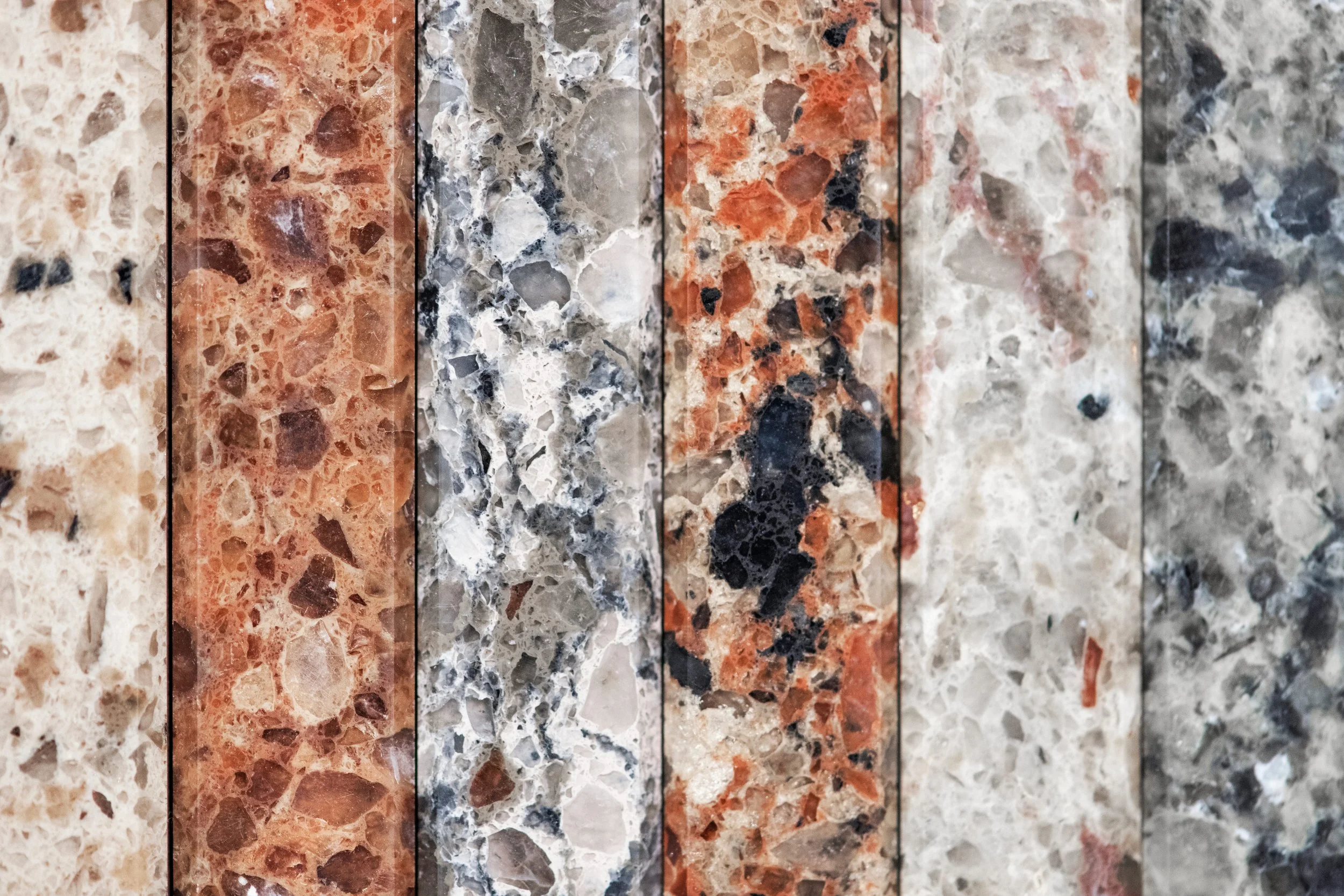
What Each Material Actually Is at the Molecular Level
Before comparing performance, it's worth understanding what these materials fundamentally are — because their molecular composition is what drives every performance characteristic downstream.
Marble is a metamorphic rock formed when limestone is subjected to intense heat and pressure deep within the earth, causing the calcium carbonate crystals to recrystallize into a denser, more uniform structure. The " result is a stone that is relatively soft (Mohs hardness 3–4), calcium-based (and therefore reactive to acids), and available in a range of colors determined by mineral impurities introduced during metamorphism — white from pure calcite, grey from clay, green from " serpentine, and the famous gold and rust tones from iron compounds.
Graniteis an igneous rock formed when magma cools and crystallizes slowly beneath the earth's surface over millions of years. Its primary minerals are quartz, feldspar, and mica — all hard, stable compounds that give granite its characteristic hardness (Mohs 6–7), its resistance to heat and scratching, and its distinctive speckled or crystalline visual texture. Because granite is silica-based rather than calcium-based, it does not react chemically to household acids.
Quartz(engineered quartz) is not " a natural stone at all — it is a manufactured composite material consisting of approximately 90–95% ground natural quartz crystal bound with polymer resins, pigments, and other additives. The manufacturing process produces a slab that is non-porous by design (the resins fill all pore space), dimensionally consistent, and available in any color or pattern that can be printed or pigmented into the mixture. The Mohs hardness of engineered quartz is typically 7, similar to natural quartz mineral.
Porcelain (countertop-grade) is a sintered ceramic material — fired at temperatures exceeding 1200°C under high pressure — made from refined clays, feldspar, and silica. The sintering process fuses the particles at the molecular level, producing an ultra-dense, essentially non-porous surface with a Mohs hardness of 7–8. Surface patterns are applied via high-definition digital printing before firing and are permanent. Unlike all three materials above, porcelain contains no resins and is entirely mineral in composition.
| Property | Marble | Granite | Quartz | Porcelain |
|---|---|---|---|---|
| Material type | Natural stone | Natural stone | Engineered composite | Sintered ceramic |
| Mohs hardness | 3–4 | 6–7 | ~7 | 7–8 |
| Porosity | Medium–High | Low–Medium | None | None (<0.5%) |
| Heat resistance | Good | Very good | Limited (resins) | Exceptional |
| Acid resistance | Poor (etches) | Excellent | Excellent | Excellent |
| Sealing needed | Yes (frequent) | Yes (periodic) | No | No |
| UV resistance | Good | Good | Fair (resins yellow) | Excellent |
| Each slab unique? | Yes | Yes | No | No |
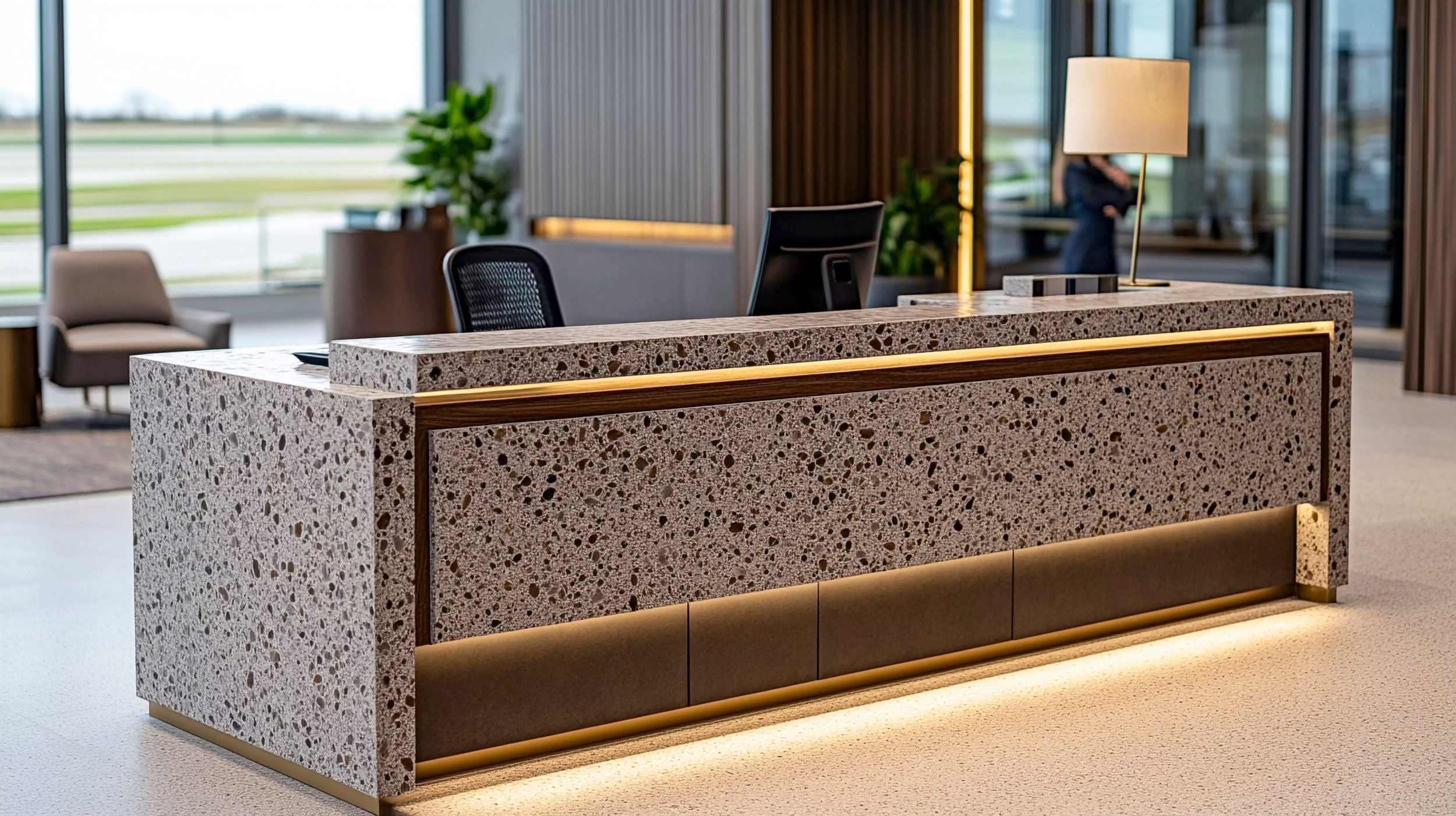
Marble: The Most Beautiful and the Most Demanding
No other countertop material generates the emotional response that marble does. Its luminous white background, the dramatic sweep of grey or gold veining, the way it seems to glow under natural light — these qualities have made marble the benchmark of luxury in residential architecture for centuries. There is a reason Michelangelo carved the David from Carrara marble: the stone has a quality of light and depth that no synthetic material has fully replicated.
In a kitchen, marble asks a great deal of the people who use it. Its calcium carbonate composition means that any acidic substance — lemon juice, vinegar, wine, tomato sauce, even sparkling water — will chemically etch the surface on contact, dulling the polish in that spot and leaving a permanent mark that no amount of cleaning will remove. It requires sealing to minimize staining, and even with diligent sealing, a heavily used kitchen marble surface will develop patina, etching, and marks over time.
The homeowners who thrive with marble are those who understand and accept this reality — who see the patina not as damage but as the authentic record of a kitchen being lived in. They tend to be people who appreciate materials that change and age, who have a philosophical comfort with imperfection, and who find the maintenance ritual manageable rather than burdensome. For those people, marble in the kitchen is not a compromise — it is exactly the right choice.
Granite: The Reliable Workhorse That Never Gets Enough Credit
Granite spent much of the 2010s being dismissed as the countertop of the previous decade — the material that had saturated the market and become too common to be considered premium. That dismissal was always somewhat unfair and is now actively reversing. Granite is experiencing a design renaissance as homeowners rediscover what makes it exceptional: genuine hardness, heat tolerance, acid resistance, natural beauty, and a range of colors and patterns that span from subtle and understated to dramatically spectacular.
High-end granite — Blue Bahia, Taj Mahal, Fusion, White Ice, Azul Macaubas — has a visual complexity and depth that engineered materials genuinely cannot replicate. These are not the ubiquitous beige and brown granites of early 2000s subdivision kitchens. They are geological events frozen in stone — swirling blues, luminous whites, deep blacks with gold crystals — and they are unique in a way that manufactured materials simply are not.
Practically, granite requires periodic sealing — typically once or twice a year for kitchen countertops — to maintain its stain resistance. It does not etch from acids. It handles heat very well. It is hard enough that knives will not scratch it (though your knife edges will suffer). For homeowners who want natural stone authenticity with greater practical forgiveness than marble, granite remains one of the most compelling choices available.
Quartz: The Engineered Solution for Maximum Practicality
Engineered quartz became the dominant countertop material in the U.S. market over the last fifteen years because it solved real problems. Families with children who couldn't reliably maintain sealed marble or granite found in quartz a surface that could handle anything they threw at it without requiring a maintenance regimen. Interior designers found in quartz a consistent, predictable material that could be specified with confidence — no slab variation surprises, no sealing instructions to communicate to clients.
The best engineered quartz products have reached a level of visual sophistication that makes them genuinely competitive with natural stone aesthetically — particularly for white and grey marble-look applications where the consistency of the manufactured pattern is actually an advantage over natural stone's variability. The resins that make quartz non-porous also give it a surface that feels slightly warmer and more resilient underhand than cold, hard natural stone — a subtle tactile quality that many people prefer.
The limitations are real but manageable: avoid direct prolonged heat contact (no hot pans directly on the surface), be aware that resin-based surfaces can yellow or discolor under intense UV over many years, and understand that the manufactured consistency that makes quartz predictable is also what makes it look obviously non-natural to a trained eye.
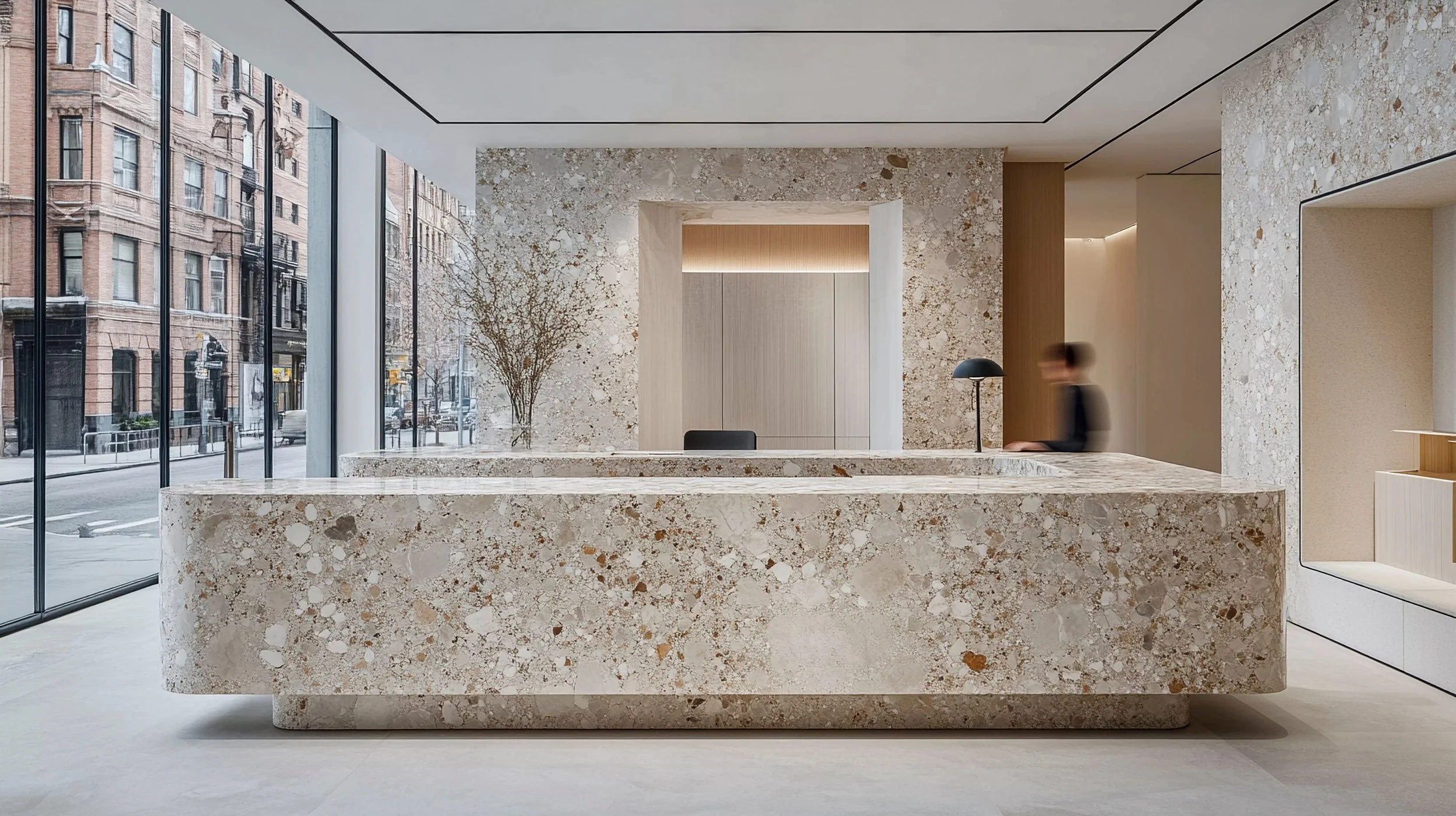
Porcelain: The New Challenger with a Specific Performance Profile
Porcelain has emerged as the material of choice for homeowners who want maximum practical performance and a contemporary aesthetic direction. Its UV stability makes it genuinely suitable for outdoor kitchens and sun-exposed spaces where quartz would yellow and natural stone would need careful sealing. Its heat resistance — the result of being manufactured at kiln temperatures that exceed domestic cooking by a wide margin — means hot pans can be placed directly on the surface without consequence.
The trade-off is brittleness: porcelain's extraordinary hardness comes with vulnerability to chipping at edges and corners under sharp impact, and repairs are essentially impossible once chips occur. It also lacks the visual authenticity of natural stone — its patterns are digitally printed reproductions rather than geological reality, and to a knowledgeable eye, the difference is perceptible.
For the right application — particularly outdoor kitchens, modern design contexts, and installations where UV resistance and chemical tolerance are priorities — porcelain is genuinely excellent. For traditional kitchens and applications where natural material authenticity matters, it is less convincing.
"The right material is not the one with the longest list of advantages — it's the one " whose advantages match the way you actually live, cook, and care for your home."
Every one of these materials has a kitchen it's perfect for — and a kitchen where it's the wrong choice. The skill is in matching material to reality: the scale of your kitchen, the intensity of your cooking, your maintenance preferences, and the architectural character of your home. East Coast Surfaces carries an extensive selection across all four categories, with knowledgeable staff who can walk you through real samples, real projects, and the honest trade-offs of each material in your specific " context. Explore the full collection, browse the project gallery, and reach out to start the conversation.