As a designer, I have worked extensively with natural stone suppliers in Rhode Island and elsewhere. There are three steps to success here, and you need to nail them all.
Introduction: Warm-Up Your Kitchen With Natural Stone Surfaces
White and gray kitchen countertops have dominated the scene in recent years. Increasingly, clients have asked me for materials that would bring some warmth into these kitchens while preserving an elegant aesthetic.
This is where Taj Mahal quartzite came to prominence.
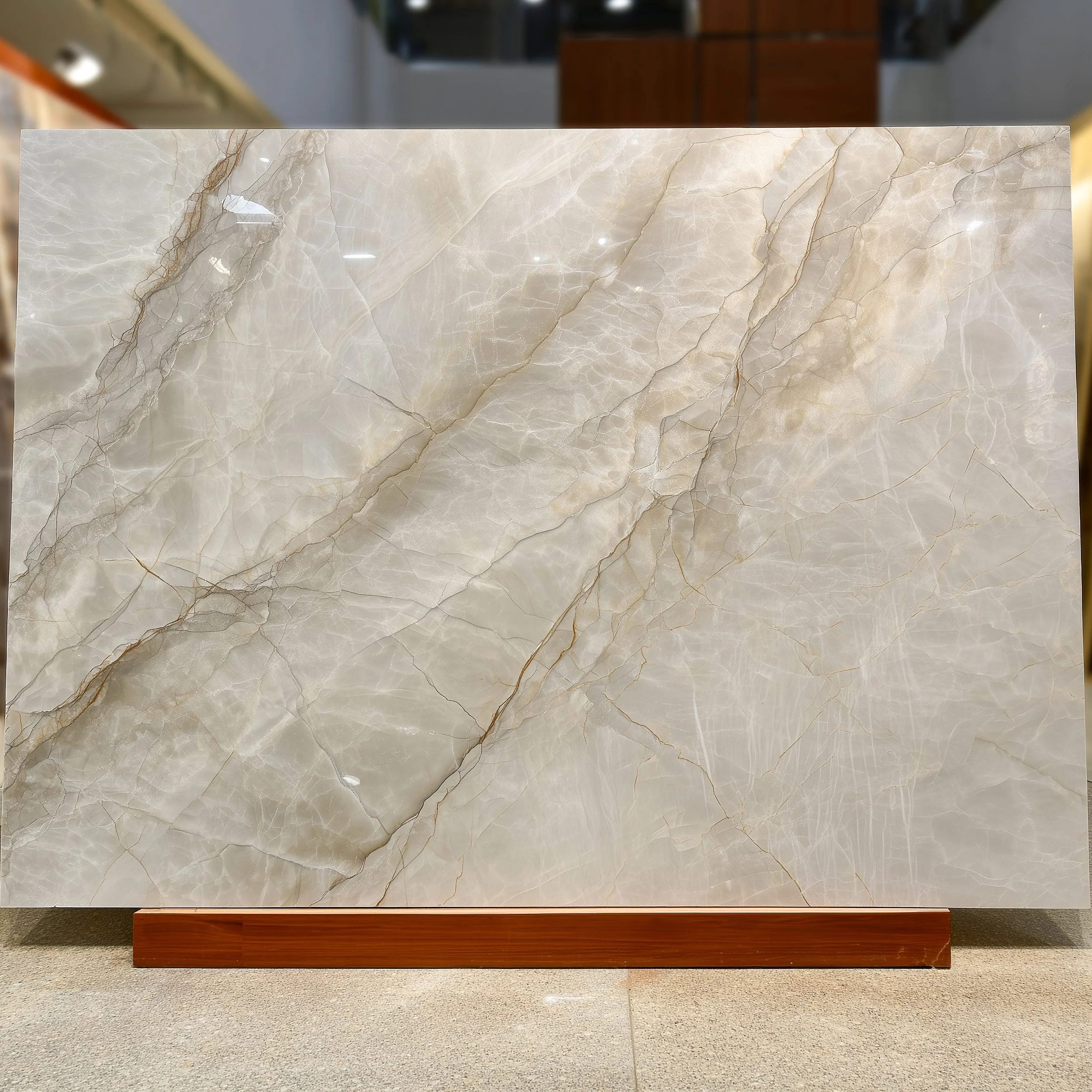
With its creamy beige/ivory tones, gentle organic movement, and distinct veins, Taj Mahal quartzite provides a warmer alternative to all-white surfaces. It complements contemporary designs and pairs effortlessly with traditional cabinetry.
What matters, however, is not only appearance but performance, care requirements, and inspection needs.
1. What Sets Taj Mahal Quartzite Apart?
To start, Taj Mahal is a natural quartzite prized for its warm tones. In contrast to engineered quartz, Taj Mahal is a real natural rock created during metamorphism of quartz-rich sandstone.
The material may exhibit a beige or ivory base, with organic movement ranging from pale to deep gray and taupe. Every slab has a unique vein structure and movement due to the inherent variability in natural stone.
Two Taj Mahal slabs cut from the same stone may differ in terms of veins and general pattern. East Coast Surfaces includes Taj Mahal within its quartzite collection with beige and ivory as primary colors, moderate variation, and both polished and leathered finishes. Check existing stock before placing orders.
Explore the Taj Mahal quartzite among other materials at East Coast Surfaces.
2. Why Taj Mahal Quartzite Complements Modern Kitchens Perfectly
Taj Mahal quartzite is an excellent choice precisely because it offers warmth without overwhelming the space.
An all-white countertop might appear too cool with the appropriate cabinet finishes. Similarly, busy stones could easily overpower a smaller kitchen interior.
In comparison, Taj Mahal strikes a middle path.
Its natural base tone provides a lot of flexibility in styling choices. At the same time, the stone's veins introduce sufficient visual intrigue.
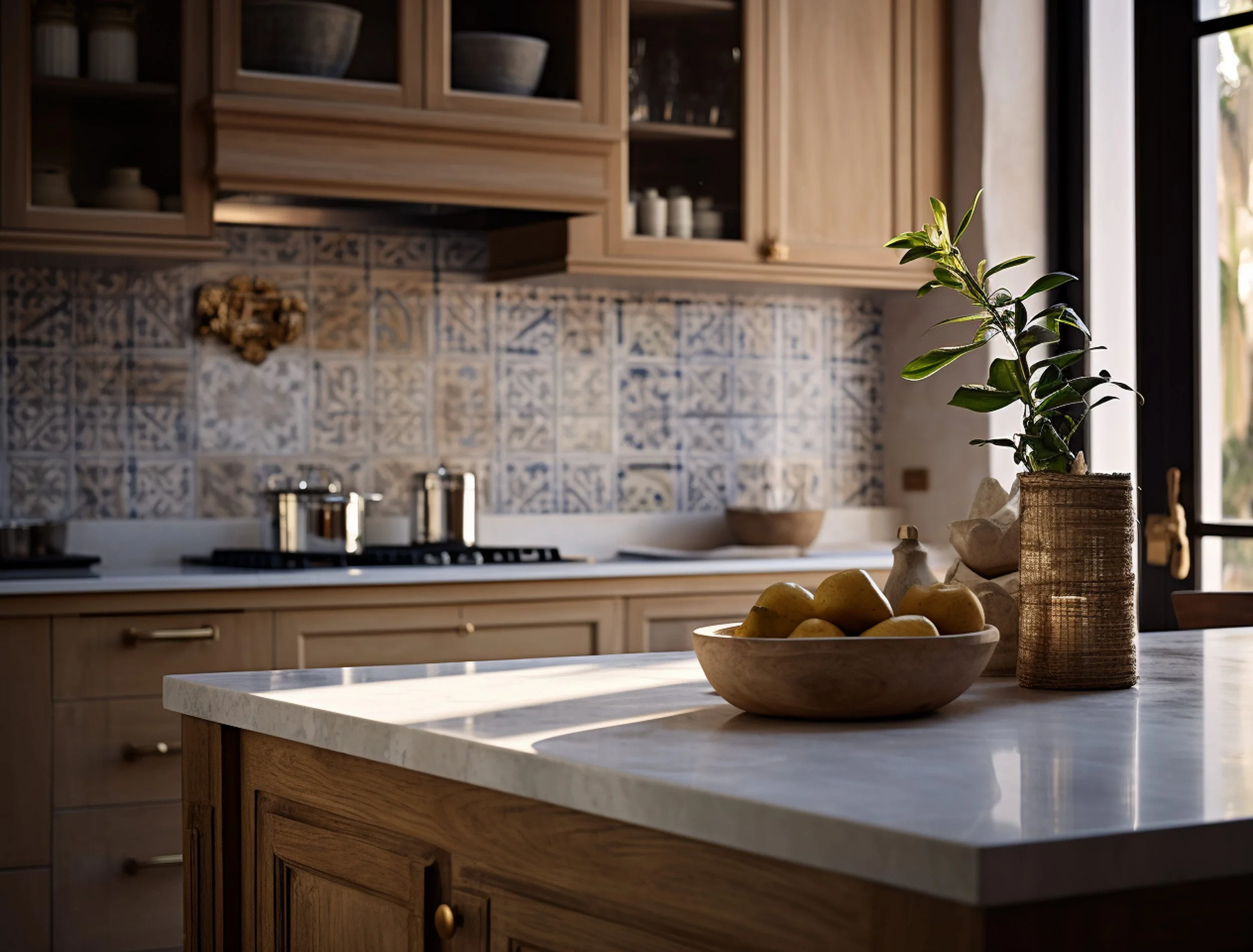
The material works particularly well in kitchens featuring white/off-white cabinets, natural oak or walnut cabinetry, warm beige and taupe cabinets, brushed brass and bronze hardware, creamcolored backsplashes, or soft gray/neutral floors.
Moreover, Taj Mahal quartzite serves as an excellent option for kitchen islands. Due to increased surface area, the material's natural pattern receives ample opportunity to shine. This turns the countertop into a focal point within the kitchen rather than a simple work surface.
3. Which Is Better for You: Taj Mahal Quartzite or White Quartz?
Both Taj Mahal quartzite and white quartz are able to add elegance to any kitchen. Yet, each material differs in several important aspects.
Taj Mahal is a natural quartzite. Each slab has unique veining and movement because it forms organically inside natural rocks. This appeals to those preferring natural variability.
White quartz is an engineered stone fabricated using crushed quartz aggregate, resins, dyes, and pigments. The consistency allows creating various surface patterns, including highly uniform designs.
Another critical factor to consider is the required care and maintenance. Naturally occurring Taj Mahal requires professional sealing and treatment based on its unique properties. White quartz does not need sealing since it is non-porous; nonetheless, heat protection is essential.
Neither material has clear advantages or disadvantages overall. You must choose based on your preference toward natural variability or uniform engineered surfaces.
For further guidance, explore the East Coast Surfaces quartz countertop collection.
4. Polished and Leathered Taj Mahal Quartzite: Which to Choose?
A different surface finish alters the aesthetics of Taj Mahal quartzite considerably.
Polished Taj Mahal Quartzite
Polished Taj Mahal quartzite features smooth reflective surfaces, highlighting the natural stone's colors and veining. Such countertops appear stylish as focal points within modern kitchen interiors.
Additionally, polished Taj Mahal reflects surrounding lights, potentially illuminating more areas in adjacent rooms depending on kitchen design.
Leathered Taj Mahal Quartzite
The leathered Taj Mahal finish introduces natural stone textures, warmth, and authenticity. It pairs nicely with natural wooden cabinets and other finishes.
Textured leathered surfaces tend to conceal fingerprints, oil stains, water spots, etc., effectively. Thus, consider checking Taj Mahal quartzite finishes in person rather than reviewing product photographs online.
Prior to installation, consult with your supplier on the benefits of each Taj Mahal quartzite finish and pick the one best suited to your needs.
To help you make a decision, compare Taj Mahal quartzite finishes firsthand under diverse lighting conditions. If possible, inspect Taj Mahal quartzite slabs in-person at an authorized showroom.
5. How Do You Take Care of Taj Mahal Quartzite?
As with all natural stone countertops, Taj Mahal quartzite requires professional sealing prior to use. Yet, sealing depends on the particular slab characteristics, such as porosity. Therefore, consult with your stone installer on the need for professional sealing and appropriate sealant.
Even after professional sealing, Taj Mahal quartzite countertops should be cared for carefully to preserve their condition. Only use cleaning products suitable for natural stones.
Avoid exposing Taj Mahal quartzite to harsh acids, alkalis, abrasives, and chemical substances. Never soak or submerge Taj Mahal quartzite countertops.
For more information, refer to the East Coast Surfaces care and maintenance guidelines for various countertop types.
6. The Importance of Checking Taj Mahal Quartzite Slabs Personally
This is always necessary when selecting Taj Mahal quartzite.
A small sample can help you identify basic colors of the chosen stone. However, a sample cannot illustrate an entire slab's complex veining, movement, and mineral line distribution.
Thus, once you visit a retailer showcasing natural stones, review the full slab personally. Evaluate which areas of Taj Mahal veins will align along countertops, islands, etc.
Additionally, assess seam placement to avoid cutting important parts of Taj Mahal veins. Compare Taj Mahal quartzite samples against cabinet samples, floors, walls, and backsplashes. Beige quartzite slabs will have different appearances depending on whether the surrounding materials are warm or cool.
Learn more tips on assessing Taj Mahal quartzite from our blog on evaluating natural stone slabs like professionals.
7. Can Taj Mahal Quartzite Work For You?
In conclusion, Taj Mahal quartzite can work wonders when bringing natural stones into your home.
However, the material might not meet the expectations if you prefer consistent patterns or nonporous engineered stones. Furthermore, Taj Mahal quartzite entails maintenance typical for natural stones.
The secret lies in finding the appropriate Taj Mahal quartzite slab and knowing its maintenance specifics.