2CM vs 3CM Countertops: What You’re Actually Getting for the Extra Thickness
Why Half an Inch Can Change an Entire Kitchen
Countertop thickness sounds like a minor technical specification, but the difference between 2CM and 3CM can affect the way a kitchen looks, how it is supported and how the edge is fabricated. East Coast Surfaces' existing guide explains that 2CM is roughly three-quarters of an inch while 3CM is about one-and-a-quarter inches. For most premium residential kitchens, 3CM is the standard because it provides greater visual weight and simplifies many installation conditions. That does not make 2CM a bad product. It simply means the two options are designed for different needs. The right decision depends on the room, cabinetry, application, edge profile, material and budget. The important thing is knowing what you are actually paying for when you move from one thickness to the other.
2CM: Slimmer, Lighter and Often More Involved
A 2CM slab can create an elegant, slim appearance. It can be particularly appropriate for bathroom vanities, overlay applications and designs where a thin architectural profile is intentional. The trade-off is support. East Coast Surfaces explains that 2CM stone requires a continuous plywood substrate for structural support. That substrate becomes part of the installation and can affect overall height and appliance relationships. Because 2CM looks thin at the exposed edge, fabricators commonly use a laminated edge to create the appearance of a thicker counter. A strip of material is attached to the front edge. When executed carefully, the result can be attractive, but the lamination creates another joint and adds fabrication labor. So 2CM is not simply “less stone for less money.” It is a different construction approach.
3CM: Why It Became the Residential Kitchen Standard
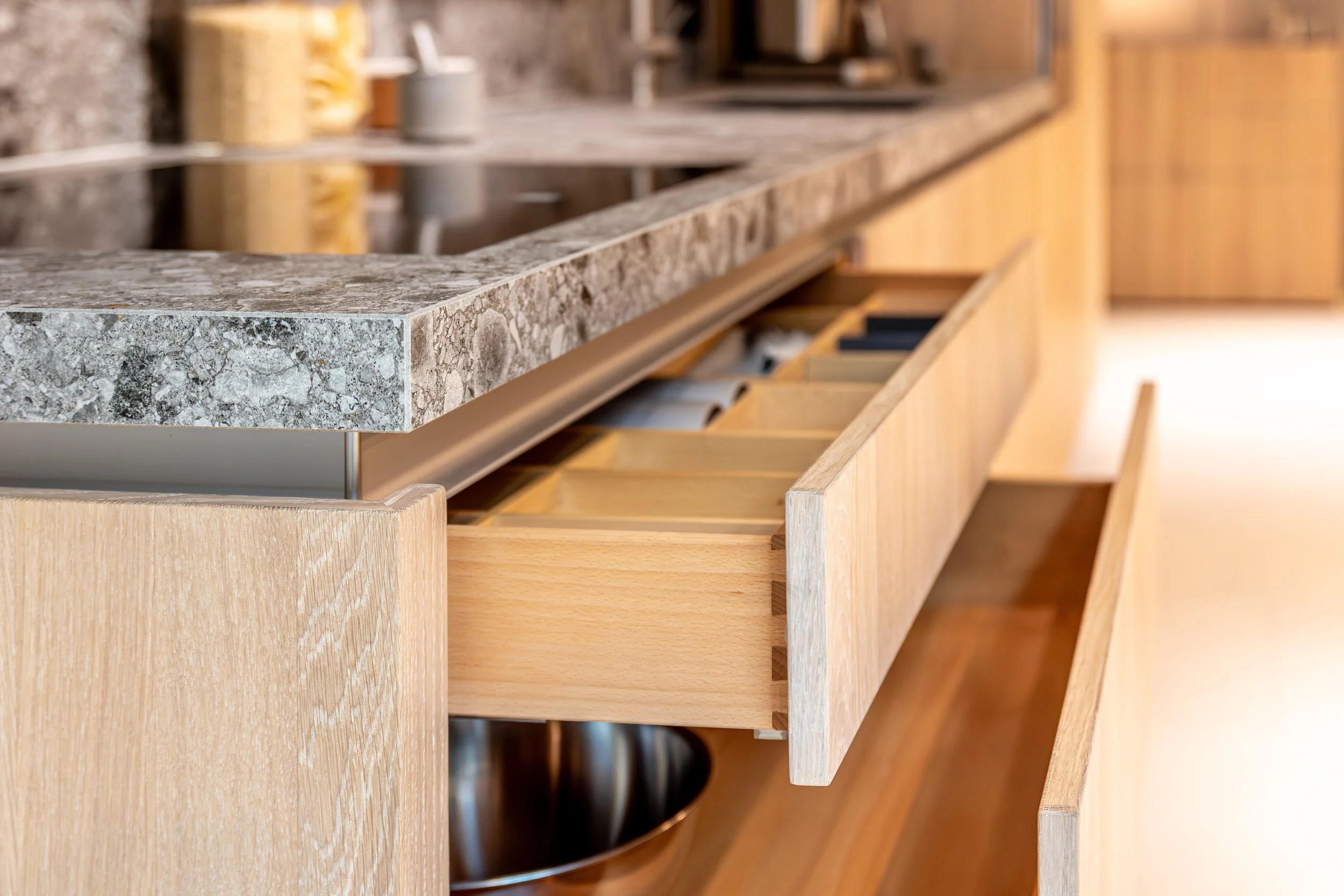
3CM provides a substantial front edge and is widely used for residential kitchen countertops. East Coast Surfaces explains that 3CM can generally be installed without a continuous plywood deck in typical applications when the cabinetry is properly prepared and the countertop is appropriately supported. The visual difference is immediately noticeable. A 3CM edge looks solid and intentional, while 2CM can look thin unless it is built up. Three centimeters also provides more flexibility with edge profiles. Eased and beveled edges remain clean and modern, while more detailed profiles can be fabricated with greater material depth. That freedom becomes especially useful when the countertop needs to complement traditional cabinetry or when the island is intended to be a focal point.
Thickness and Edge Profiles Must Be Chosen Together
A countertop thickness should never be selected independently of the edge. A 3CM slab with a simple eased edge looks clean and contemporary. The same 3CM slab with an ogee or Dupont profile feels more traditional. A mitered edge can create the appearance of a much thicker architectural block. On 2CM, a laminated edge may be necessary to achieve visual substance. That can work, but the finished detail depends heavily on fabrication quality. East Coast Surfaces' thickness article emphasizes this interaction between slab depth and edge design. When reviewing options, ask to see examples of the actual edge treatment rather than judging thickness from a sample alone.
Why Islands Are Different
Kitchen islands are visible from multiple sides and often function as the visual centerpiece of an open-plan kitchen. That makes thickness and edge treatment particularly important. East Coast Surfaces explains that designers frequently use thicker-looking edges on islands to create visual hierarchy. A mitered waterfall can make a standard 3CM slab appear dramatically thicker while allowing the stone's pattern to continue down the side. This can be especially effective with dramatic quartzite or marble, where the edge becomes another surface for the stone's movement. The fabrication, however, is more demanding because the miter must be precise and the pattern should be oriented intentionally. A thick island edge can be worth the additional investment when it creates the focal point you want, rather than simply adding thickness everywhere.
The Cost Difference Is More Than the Slab Price
Three-centimeter material contains more raw material than 2CM, so it normally costs more. But comparing only the slab price can be misleading. A 2CM installation may require continuous plywood support and a laminated edge. Those additions bring material and labor costs. A 3CM slab may have a higher material cost but a simpler construction approach. When comparing quotes, ask for the complete installed cost. Include substrate, edge treatment, fabrication, delivery and installation. That is the number that tells you what you are actually paying for. The question should not be “Is 3CM more expensive?” It is. The better question is “Does the additional cost solve a design or construction need that matters to my project?”
When 2CM Is the Better Choice
2CM can be an excellent choice when a slim profile is part of the design. Bathroom vanities are a common example because the thinner edge can feel appropriately scaled to a smaller room. It can also be useful in overlay projects where adding significant height is undesirable. Some contemporary designs deliberately use thin surfaces to create a floating, minimalist appearance. If you are considering 2CM for a kitchen, ask the fabricator to explain the substrate and edge construction. If you like the appearance and understand the construction, there is no reason to reject it simply because 3CM is more common.
When 3CM Is the Better Choice
For a primary residential kitchen, 3CM is often the easiest recommendation. It provides substantial visual weight, works with a broad range of edge profiles and is widely used for premium kitchen installations. It is particularly compelling for large islands, highly visible countertops and projects where the edge itself is an important design feature. It also reduces the need to build visual thickness into the edge. If you have no strong reason to choose 2CM, ask your fabricator what 3CM would change in your particular kitchen. The answer may involve more than aesthetics.
How to Make the Decision
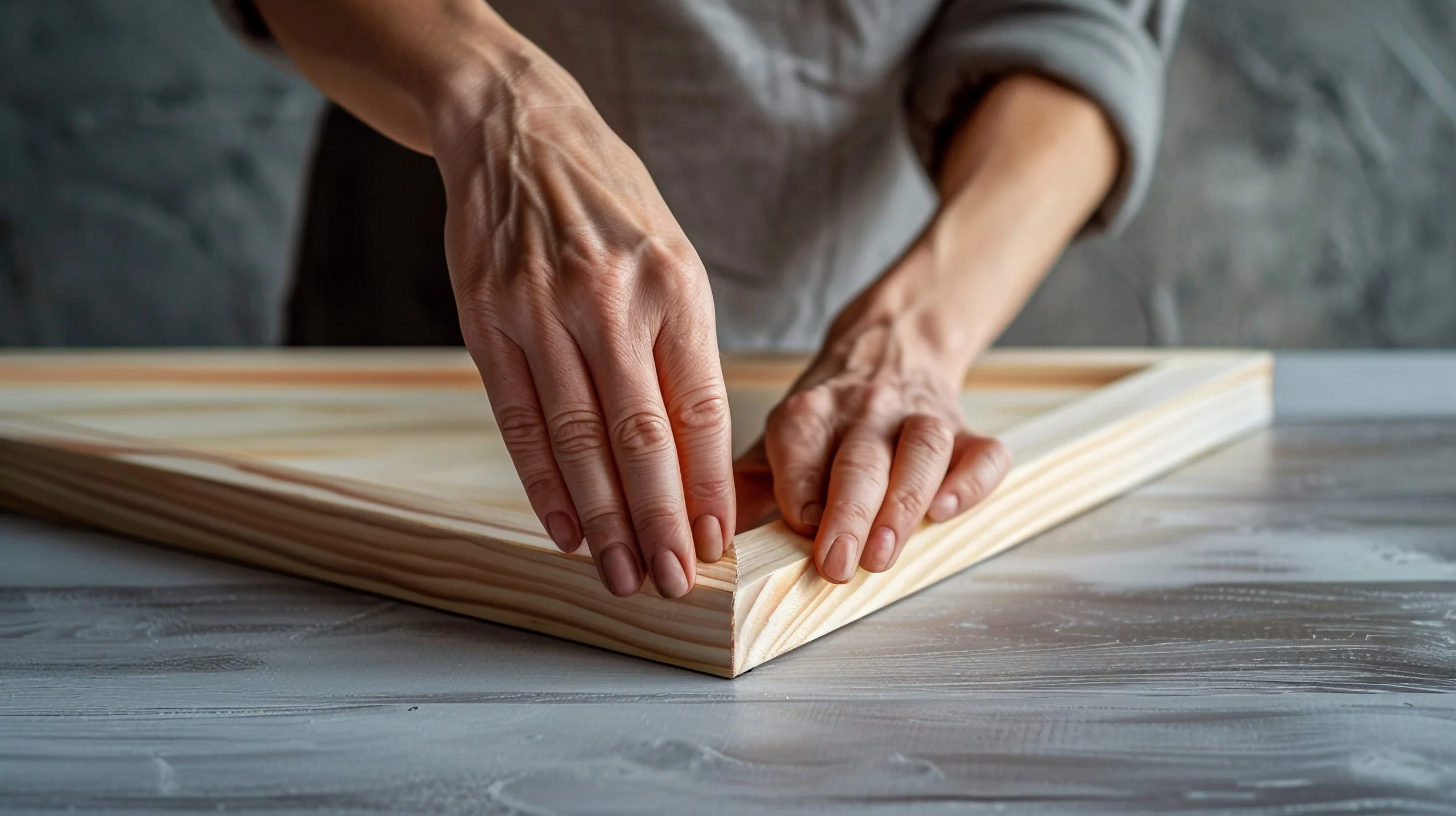
Look at five things together: material, cabinet construction, application, edge profile and room scale. A traditional kitchen may benefit from the substance of 3CM. A modern bathroom may look better with 2CM. A dramatic island may use 3CM with a mitered waterfall. East Coast Surfaces can help evaluate these combinations before fabrication, which is more useful than choosing a thickness as a standalone line item. The goal is not to choose the thickest countertop available. It is to choose the thickness that makes sense for the design and construction of the space.
Conclusion: Pay for Thickness When It Adds Real Value
The move from 2CM to 3CM can provide more visual substance, greater edge flexibility and a simpler installation approach in many residential kitchens. But 2CM remains valuable for applications where a thinner profile is desirable. The smartest decision is not based on a generic “3CM is always better” rule. It is based on what the material, cabinetry and design require. East Coast Surfaces works with quartz, granite, marble, quartzite and other surfaces and can help homeowners compare thicknesses alongside edge profiles and the actual layout. That makes it easier to spend more only when the extra thickness genuinely improves the finished result.
Explore East Coast Surfaces for countertop materials, fabrication and installation in Rhode Island.