Can You Use the Same Countertop Material for Your Island, Backsplash & Bathroom?
Yes, You Can—But Matching Everything Is Not Always the Best Design
Using the same countertop material on an island, perimeter counters, backsplash and bathroom vanity can create a strong sense of continuity. It can also become repetitive if every surface is treated exactly the same way. The better question is whether the material performs well in each location and whether repeating it improves the overall design. A dramatic quartzite can look spectacular across an island and slab backsplash. A low-maintenance quartz can make sense in both a kitchen and bathroom. A marble that is perfect for a bathroom may require more thought in a busy family kitchen. East Coast Surfaces' guide on matching countertops and backsplashes makes the important point that these surfaces play different roles. They can relate without being identical.
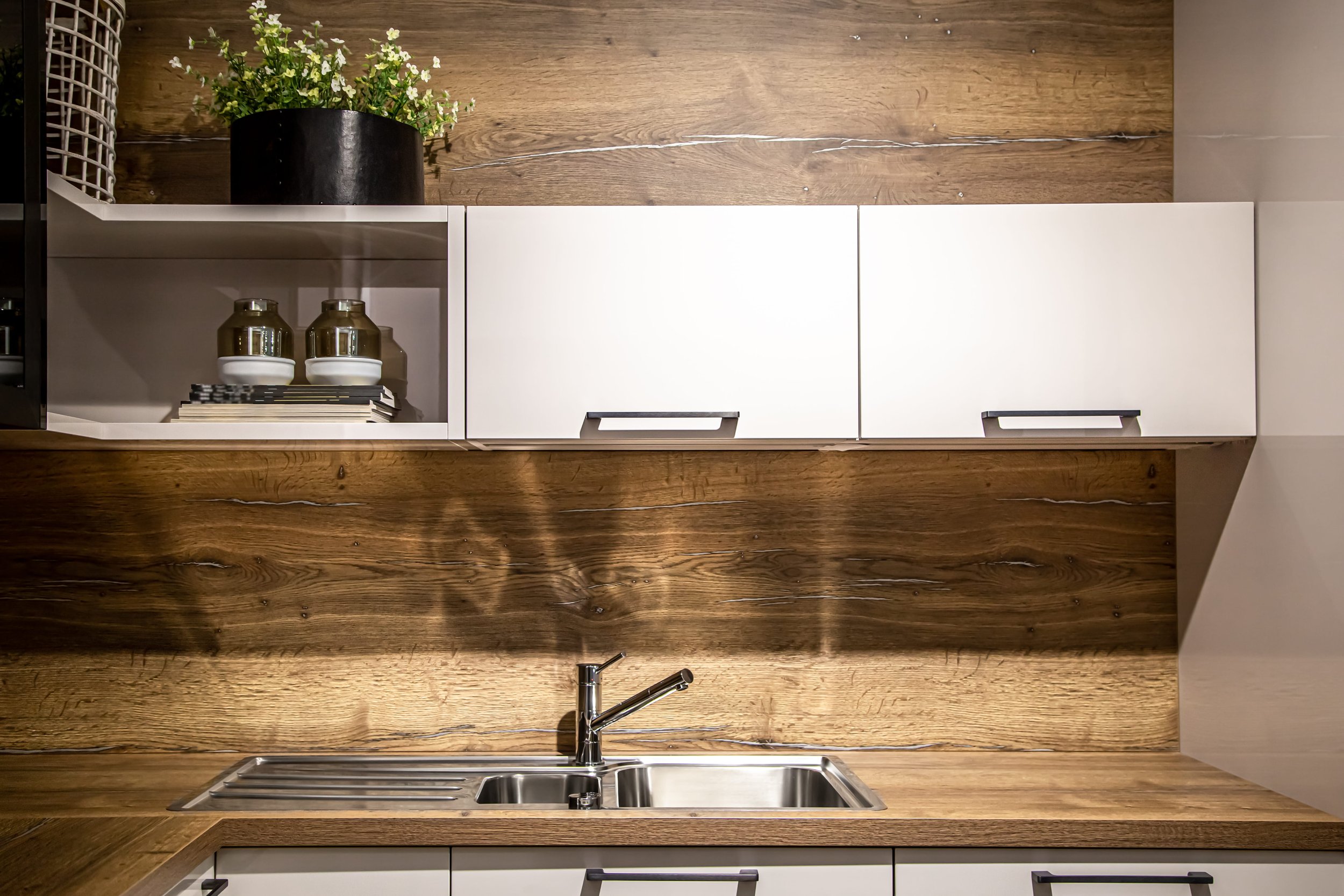
Using the Same Material on the Island and Perimeter
A matching island and perimeter countertop create a unified kitchen. This works particularly well when the cabinetry is simple and the countertop is intended to be the visual foundation. The approach is especially effective with neutral quartz, restrained granite and natural stones whose movement is strong enough to provide interest without needing a second countertop material. With natural stone, remember that “the same material” does not necessarily mean “the same appearance.” Different slabs can have different veining, color distribution and movement. If the island and perimeter need to read as one continuous design, slab selection and layout become important. A fabricator can help determine whether the available slabs will coordinate or whether a deliberately contrasting island would create a stronger result.
When a Matching Slab Backsplash Works Best
A slab backsplash extends the countertop material vertically and can make the kitchen feel calmer and more architectural. East Coast Surfaces describes slab backsplashes as a seamless alternative to traditional tile, with the practical advantage of fewer grout joints. Matching is particularly effective when the countertop itself is dramatic. A highly veined quartzite or marble can become the hero of the room when the same material continues up the wall. There are also practical benefits. A slab surface is easy to wipe down and does not have the traditional network of grout lines. The trade-off is cost and fabrication. You need additional material, and the pieces must be carefully cut around outlets, windows and other obstacles. Pattern continuity also needs to be considered.
Can the Bathroom Use the Same Material?
Yes. Quartz, granite, marble and other countertop materials can work beautifully for bathroom vanities. Repeating a kitchen material in the bathroom can create a visual thread through the home. For example, a warm quartzite-inspired palette can appear on a kitchen island and return later on a bathroom vanity. The rooms do not need to be identical; the repeated material simply connects them. However, there is no rule requiring the bathroom to match. Bathrooms can be an opportunity to introduce a different stone or color while maintaining a related palette. Performance should also be considered. A material that works beautifully in a low-use bathroom may require more maintenance when exposed to the heavier food, heat and impact demands of a kitchen.
Match Performance to the Room
The same surface can face very different conditions in different rooms. Kitchen counters encounter knives, cookware, oils, food acids and heavy objects. Bathroom vanities experience water, cosmetics and personal-care products. Marble illustrates the point. It can be a beautiful bathroom choice for someone who appreciates natural aging, while the same homeowner may choose quartz or quartzite for a heavily used kitchen. The best strategy is therefore to evaluate each room independently before deciding whether repetition makes sense. A consistent material is valuable only when it performs appropriately everywhere it is used.
Three Ways to Create a Cohesive Design
You have three basic choices.
Match: Use the same material. This creates maximum continuity and can be especially effective in minimalist or luxury interiors.
Coordinate: Use different materials that share an undertone, color family or visual movement. This creates cohesion without repetition.
Contrast: Deliberately use different materials to make rooms or elements distinct. The contrast should still have a visual connection through cabinetry, hardware, flooring or color. East Coast Surfaces also discusses mixing countertop materials as a way to use different surfaces according to their strengths.
The Island Does Not Have to Match
The island can be a different material when you want it to function as the focal point. A quiet quartz perimeter can support a dramatic quartzite island. A matching material can also be made distinct through a waterfall edge or different thickness. The important thing is visual intention. The island should connect to the rest of the room through color, cabinetry, backsplash or hardware. East Coast Surfaces' guidance on island edge design explains why the island can be treated as a hero element while perimeter counters remain quieter.
A Simple Checklist Before You Repeat a Material
Before choosing one surface for several rooms, ask: Does it perform well in every application? Will the slabs coordinate? Does the maintenance requirement work for each room? Does repeating it improve the visual story? Is the additional material cost worthwhile? Would a related material create more depth? These questions prevent a common mistake: choosing the same material everywhere simply because matching feels safe. Good design is not about following a rule. It is about creating relationships between materials.
Conclusion: Consistency Is a Tool, Not a Requirement
You absolutely can use the same countertop material on the island, backsplash and bathroom vanity. When the material suits every application, repetition can make the home feel sophisticated and connected. But you can also mix materials strategically. A quiet quartz perimeter, dramatic quartzite island and simple bathroom marble can coexist beautifully when color, finish and design language connect them. East Coast Surfaces offers quartz, granite, quartzite, marble, soapstone, porcelain and other surfaces and works with homeowners on both matching and mixed-material designs. The goal is not to make every room identical; it is to make every material feel intentional.
Explore East Coast Surfaces for countertop materials, fabrication and installation in Rhode Island.