Countertop Maintenance by Material: What You’ll Actually Do Every Year
Start With the Material, Not a Generic Cleaning Checklist
Countertop maintenance is often presented as either completely effortless or unnecessarily complicated. The truth is somewhere in the middle. Every countertop needs routine cleaning and sensible use, but the amount of maintenance you perform depends heavily on the material. Quartz does not have the same yearly routine as marble. Granite and quartzite may need periodic sealing depending on the stone. Soapstone develops a natural patina. Porcelain is nonporous and generally low maintenance, but it still benefits from prompt spill cleanup and appropriate cleaners. That is why a good maintenance plan should begin with the surface you actually own. East Coast Surfaces' Care & Maintenance guide separates natural stone, engineered quartz and porcelain rather than treating every countertop the same. That material-specific approach is the key to keeping a countertop looking good for years.
The Everyday Habits That Matter More Than an Annual Deep Clean
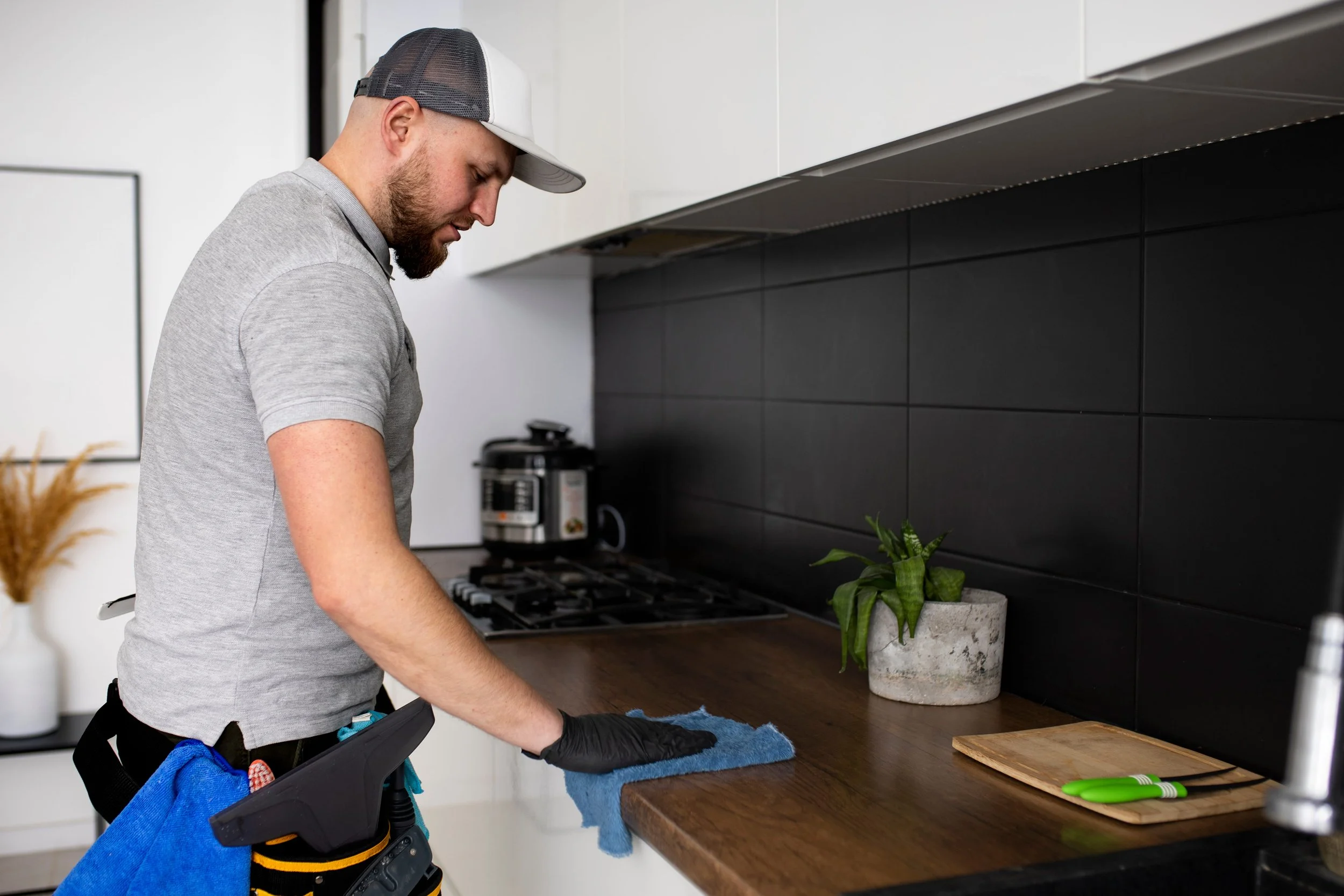
The most important maintenance happens during ordinary use. Wipe spills promptly, especially on porous natural stone. Use a cutting board instead of cutting directly on the surface. Use trivets where the material requires heat protection. Avoid abrasive pads and cleaners that are not designed for the countertop. For many materials, warm water and mild soap are an excellent starting point. Quartz is particularly straightforward, but East Coast Surfaces notes that quartz is stain resistant rather than completely stain proof. A surface can resist ordinary spills and still develop a stubborn mark if an aggressive substance sits for a long period. Do not assume that stronger chemicals mean better cleaning. Countertops are finished surfaces, and the wrong chemical can dull, etch or otherwise damage them. Follow the care instructions for the exact product whenever they are available.
Quartz: Your Annual Routine Is Mostly Inspection and Good Habits
Quartz is one of the easiest countertop materials to maintain because it is nonporous and normally does not require sealing. Your annual routine is therefore less about applying a treatment and more about checking the surface and continuing good daily habits. Clean spills promptly, especially acidic or strongly pigmented substances. Use a cutting board even though quartz is hard and scratch resistant. Protect the surface from very hot cookware because engineered quartz contains resin and manufacturers generally recommend heat protection. Once or twice a year, inspect exposed corners and edges for chips. Look around sink openings and areas where heavy objects are commonly handled. Check for persistent stains or residue that ordinary cleaning has not removed. If you discover a chip, have it evaluated rather than trying to enlarge or conceal the damage yourself. For homeowners who want a low-maintenance surface, quartz remains one of the most practical choices.
Granite: Sealing Is the Main Annual Conversation
Granite is durable, but natural stone should not automatically be treated as maintenance-free. Different granites have different absorption characteristics, so sealing requirements can vary. East Coast Surfaces recommends sealing natural stone regularly and suggests once a year as a general guideline. More importantly, follow the recommendation for the specific stone and sealer. A dense granite and a more absorbent natural stone may not need exactly the same schedule. An annual granite routine should include a thorough cleaning, inspection for chips or cracks and an evaluation of whether the sealer is still performing. Use stone-safe, pH-neutral products rather than acidic household cleaners. Avoid abrasive pads that can scratch or dull the finish. The objective is simple: preserve the natural stone without trying to make it behave like engineered quartz.
Marble: Prevention Matters More Than Repair
Marble requires more awareness because it is softer and more porous than many countertop alternatives, and acids can etch the surface. Lemon juice, vinegar and some cleaning products can leave dull marks that are different from conventional stains. East Coast Surfaces describes marble as a soft, porous stone and recommends more frequent sealing for more porous stone such as marble. Its care guidance suggests sealing marble twice a year as a general recommendation. For a marble owner, the most valuable yearly routine is prevention. Wipe spills quickly. Avoid acidic cleaners. Use cutting boards and appropriate heat protection. Inspect the surface for changes and decide whether the natural aging is part of the look you want. Marble is often chosen precisely because it has character. A homeowner who appreciates patina and accepts that the surface may change over time can enjoy it for decades; a homeowner who wants perfect uniformity may prefer a different material.
Quartzite: Durable Natural Stone Still Needs Attention
Quartzite is known for excellent durability and natural beauty, but it remains natural stone. Depending on the particular slab, sealing may be appropriate. The annual routine should include cleaning, inspecting the surface and checking whether the protective sealer remains effective. Quartzite can also contain natural fissures, mineral movement and variation. Do not automatically interpret every line as damage. If you notice a new or changing feature, especially near a sink, cooktop or edge, have the fabricator evaluate it. Maintenance for quartzite is therefore less about complicated cleaning and more about respecting the material. Keep it clean, protect it from inappropriate chemicals, follow sealing recommendations and understand the natural characteristics you accepted when you selected the slab.
Soapstone: Maintenance Changes as the Surface Ages
Soapstone has a maintenance routine unlike most other countertop materials because the surface naturally develops patina. East Coast Surfaces explains that soapstone darkens over time and can be treated with mineral oil to make that transition more uniform. During the first several months, homeowners who want an even appearance may apply mineral oil regularly. The surface generally reaches its full patina in roughly seven to nine months. After that, mineral oil is usually applied only when the countertop begins to look dry. Soapstone is also softer than granite and quartzite, so scratches can occur. Many owners consider those marks part of the material's character. The annual routine is therefore partly technical and partly aesthetic: decide whether you want to maintain a uniform dark appearance or allow the stone to age naturally.
Porcelain: Low Maintenance Still Means Proper Maintenance
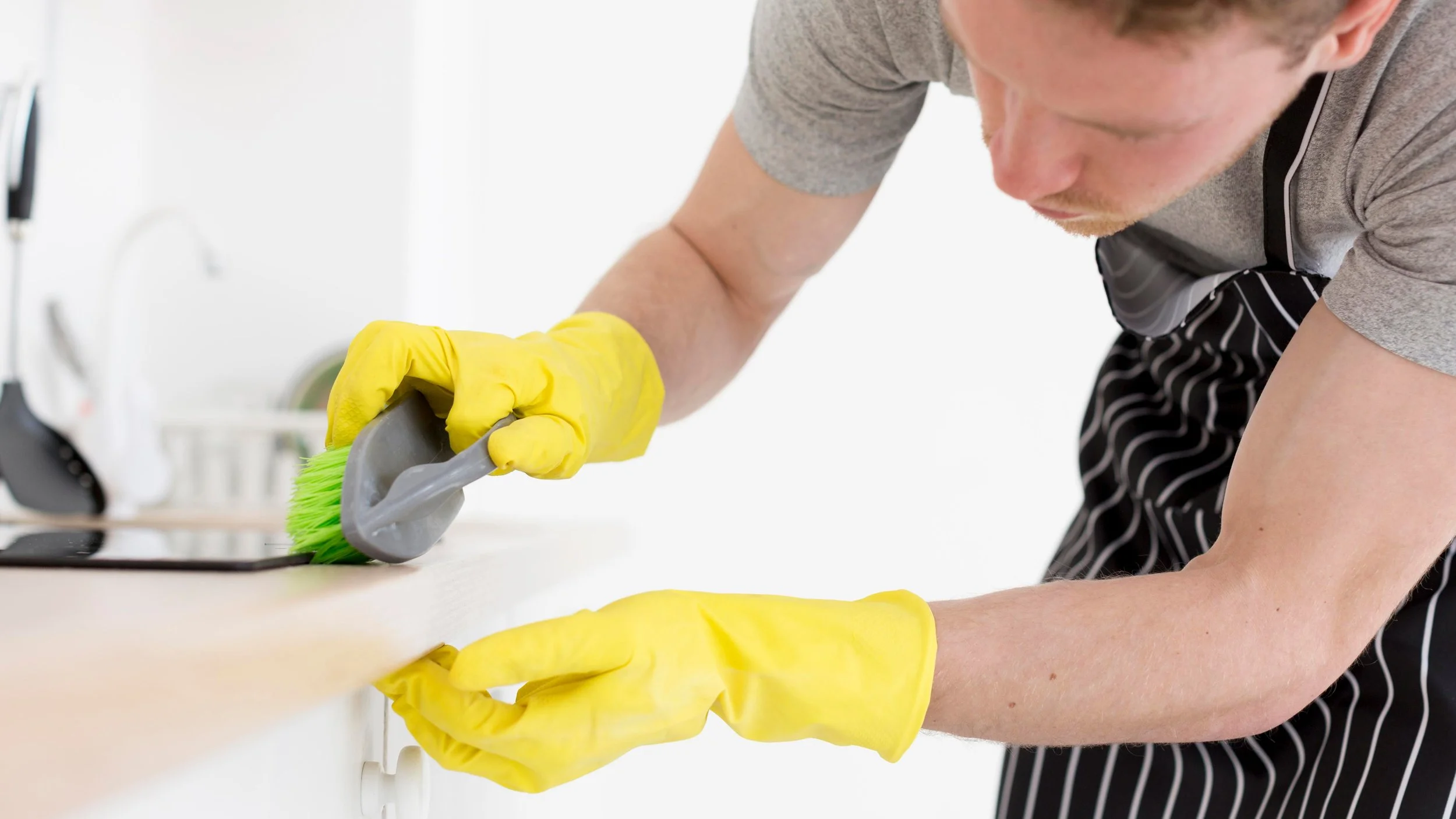
Porcelain is nonporous and highly resistant to stains, which makes it attractive to homeowners who want low-maintenance countertops. East Coast Surfaces recommends warm soapy water and a soft cloth for routine cleaning, along with prompt spill cleanup and drying after washing. Porcelain does not require sealing. Harsh chemicals are generally unnecessary for normal household cleaning, and some chemicals can damage the surface. The company also advises against using polishing machines on porcelain. Porcelain is highly heat resistant, but long-term contact with appliances that generate their own heat should still be approached carefully. A heat-safe mat can protect the surface when an appliance remains in one place for an extended period. The annual routine is simple: clean, inspect, follow the manufacturer's instructions and avoid unnecessary chemicals.
Your Once-a-Year Countertop Inspection
Regardless of material, set aside a few minutes each year to inspect the whole countertop. Look closely at exposed corners, sink openings, cooktop cutouts, seams and areas that receive heavy use. Ask five questions: Does this material need sealing? Am I using the right cleaner? Are there new chips or cracks? Am I following heat and use recommendations? Has the finish or appearance changed in a way I want to address? This is also a good time to review the care instructions supplied by the manufacturer or fabricator. If you are unsure about a stain, fissure, chip or change in appearance, professional advice is better than experimenting with a chemical or repair kit.
Conclusion: Good Maintenance Starts With Choosing the Right Material
There is no single countertop maintenance routine. Quartz generally needs simple cleaning and heat protection. Granite and quartzite may need periodic sealing. Marble requires more careful spill management and an acceptance of etching and patina. Soapstone develops character and can be maintained with mineral oil. Porcelain is nonporous and easy to clean but still benefits from appropriate care. If you are still choosing a countertop, maintenance should be part of the decision rather than something you think about after installation. East Coast Surfaces offers quartz, granite, quartzite, marble, soapstone, porcelain and other countertop surfaces and provides guidance so homeowners can select a material that fits both their design goals and their willingness to maintain it.
Explore East Coast Surfaces for countertop materials, fabrication and installation in Rhode Island.