Choosing a countertop feels exciting — until you're standing in a showroom surrounded by hundreds of slabs, each one more beautiful than the last, with no clear framework for making the right decision. It happens to almost every homeowner.
The truth is, the best countertop isn't always the most stunning one in the room. It's the one that fits your life, your kitchen, and your priorities — and stays beautiful years after installation. Before you fall in love with a slab, work through these seven essential questions. Your answers will point you directly to the right stone.
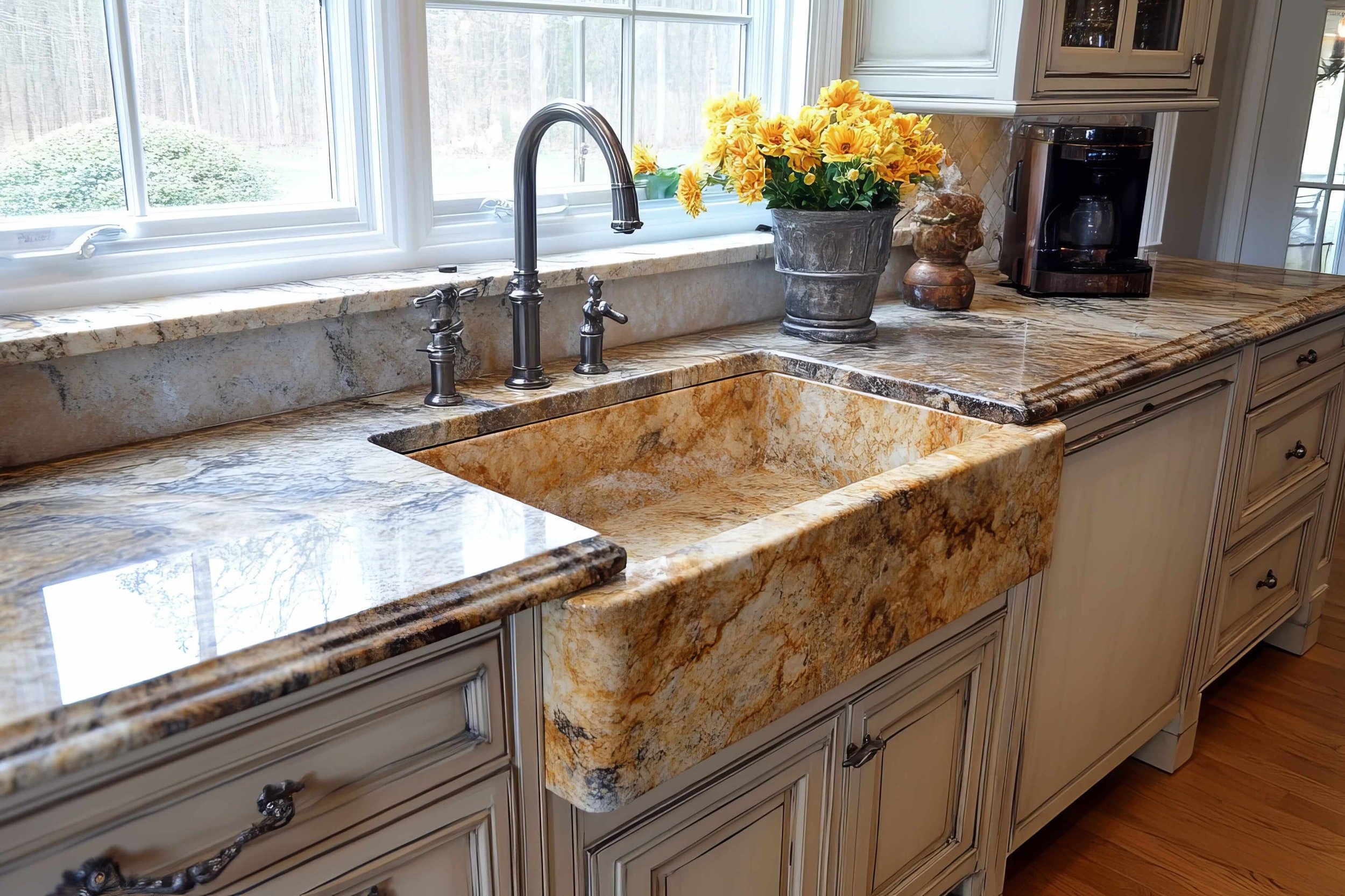
1. How Much Do You Actually Cook?
This is the single most important question, and most people underestimate how honestly they need to answer it.
A kitchen that sees daily cooking — hot pans, sharp knives, heavy pots, splashing sauces — needs a surface built for performance. Quartz and granite are your strongest performers here. Quartz is non-porous and requires no sealing. Granite is incredibly hard and handles heat directly from the stove without damage.
If your kitchen is more for occasional cooking and everyday living, you have more material freedom. Softer, more delicate stones like marble or quartzite become viable choices when the kitchen isn't under constant physical stress.
Be honest with yourself here. The countertop that looks perfect in a design magazine may not survive your Tuesday night pasta routine.
2. How Much Maintenance Are You Willing to Do?
Different stones demand very different levels of ongoing care — and what feels manageable to one homeowner feels burdensome to another.
Quartz sits at the low-maintenance end of the spectrum. No sealing, no special cleaners, no annual treatments. Wipe it down and it's done.
Granite requires periodic sealing — typically once a year or every couple of years — to maintain its stain and bacteria resistance. The process is straightforward but it is a recurring commitment.
Marble demands the most attention. It needs sealing, it etches from acidic foods and liquids like lemon juice or wine, and it shows wear over time. For homeowners who love the look but aren't prepared for that relationship, it often leads to regret.
Ask yourself genuinely: will you reseal your countertops annually? Or will life get in the way? Your honest answer narrows the field considerably.
3. Do You Have Children or Heavy Daily Traffic?
Kids change everything when it comes to surface selection. Juice spills, crayon marks, homework sessions, after-school snacks — a family kitchen takes punishment that a showroom surface was never designed to handle.
For high-traffic family kitchens, prioritize stain resistance and scratch resistance above all else. Quartz is the clear frontrunner — its non-porous surface means spills never penetrate, and its hardness handles daily impacts without showing damage.
Darker or more heavily patterned stones also tend to conceal the inevitable minor scratches and everyday wear that lighter, more uniform surfaces will highlight. If you have young children, a solid white marble countertop will age visibly in ways that may not align with your expectations.
4. What Is Your Design Style — And Will It Change?
Stone is a long-term investment. Most countertops stay in place for fifteen to twenty years or more — which means the material you choose needs to work not just with your kitchen today, but through a potential refresh or two down the road.
If your design aesthetic is clearly defined and unlikely to change — a committed minimalist, a devoted farmhouse traditionalist — lean into a material that fully expresses that style. Dramatic veined marble for a classic European kitchen. Sleek, consistent quartz for a modern space. Warm granite for a transitional or traditional design.
If your style is still evolving, choose a stone with enough neutrality to adapt. A soft white or warm grey quartz, a subtle granite, or a muted quartzite can transition gracefully through multiple design updates without looking dated.
5. What Is Your Realistic Budget — Including Installation?
Material cost is only part of the equation. Installation, edge profiling, cutouts for sinks and appliances, and any special fabrication — waterfall edges, slab backsplashes, mitered edges — all add to the total investment.
As a general framework: laminate and tile sit at the accessible end. Quartz and granite occupy the mid-to-premium range. Marble, quartzite, and exotic natural stones can reach significant price points depending on the rarity and origin of the slab.
Be specific with your fabricator about your total budget — not just your material budget. A skilled fabricator can help you find a stone that delivers the look you want within the number that actually works for your household.
6. How Important Is Uniqueness to You?
This question separates natural stone enthusiasts from engineered material devotees. Every slab of granite, marble, and quartzite is genuinely one of a kind. The veining, the color movement, the mineral variations — no two slabs are identical. If the idea of having a countertop that exists nowhere else in the world matters to you, natural stone delivers that in a way engineered materials simply cannot.
Quartz, on the other hand, is manufactured to a consistent pattern. This is actually an advantage for some homeowners — particularly those doing large installations who need multiple slabs to match perfectly. But it means your countertop, while beautiful, is not unique.
Neither approach is wrong. But knowing which one speaks to you focuses your selection considerably.
7. Have You Seen the Full Slab — Not Just a Sample?
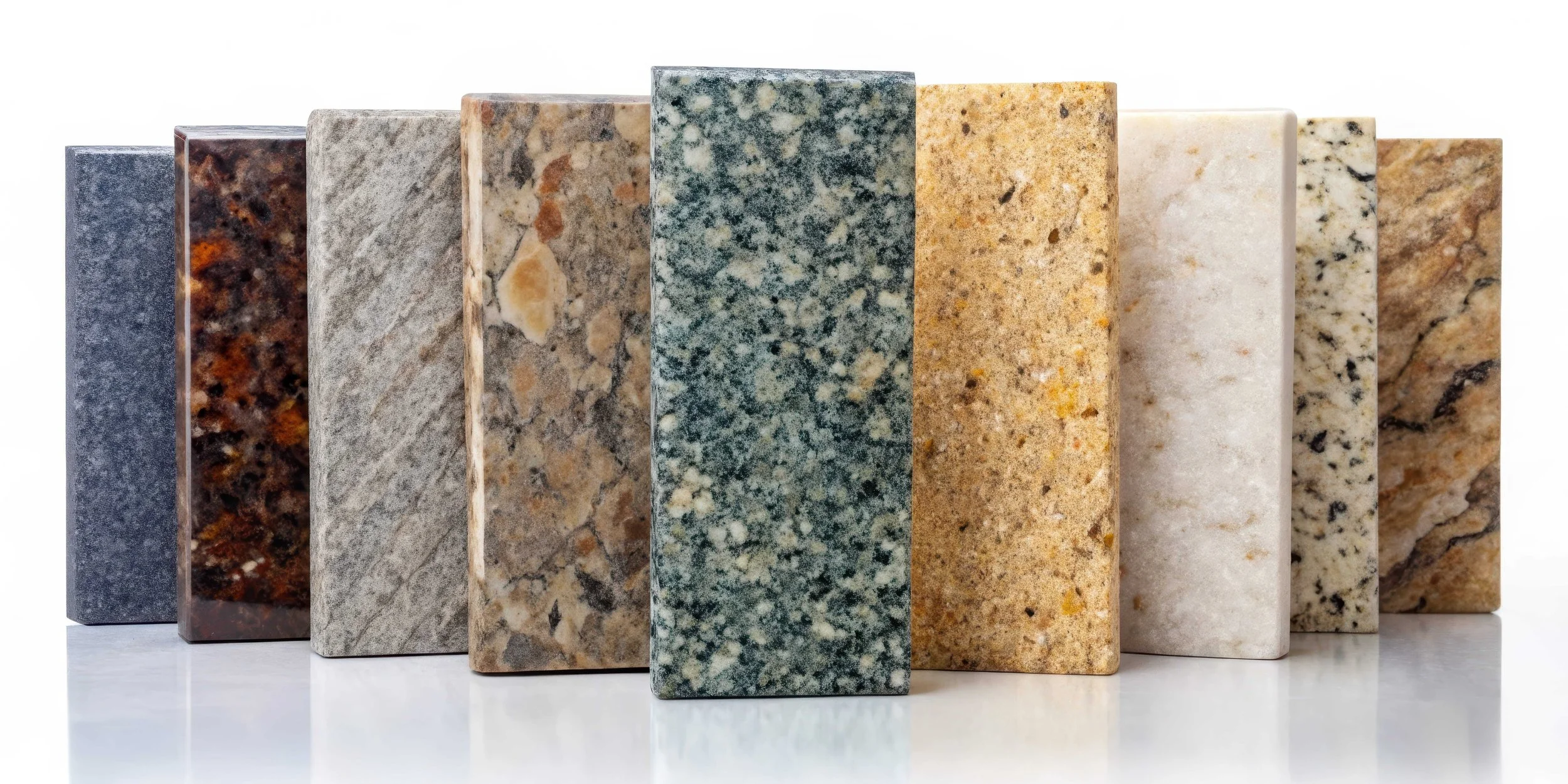
This isn't a lifestyle question — it's a practical one that saves enormous regret. Small samples in a showroom give you color and texture, but they tell you almost nothing about what the full slab actually looks like. Veining patterns, color variation, and movement across a large surface can look dramatically different from a four-inch square.
Before committing to any natural stone, view the full slab in person. See it in natural light. Understand exactly which portion of the slab will become your countertop. Ask your fabricator to mark the cut lines so you know what you're getting.
What looks like subtle, elegant veining on a sample can become overwhelming across eight feet of counter. What looks bold on a sample can look perfectly balanced at full scale. You won't know until you see the whole picture.
Conclusion
Great countertop selection isn't about choosing the most expensive stone or following the latest trend. It's about matching the right material to your real life — how you cook, how you clean, how you live, and what you love to look at every single day.
At East Coast Surfaces, we walk every homeowner through exactly this process — because the right countertop isn't just a surface. It's the foundation of a kitchen you'll love for decades.
Ready to find your perfect stone? Let's start the conversation.